
Oyster Mushroom Substrates: A Home Grower's Guide
You've got a healthy bag of colonized grain spawn on the counter, and now the internet is offering straw, hardwood sawdust, coffee grounds, bran, pellets, and combinations that sound more like laboratory formulas than a first grow. The difficult part isn't finding a possible substrate. It's choosing one that matches your equipment, preparation skills, and tolerance for contamination.
The safest way to compare oyster mushroom substrates is to connect each material to four practical questions: how it's prepared, what kind of output it can support, how forgiving it is, and what failure looks like. Research on Pleurotus ostreatus shows that substrate choice can change total yield substantially. In one study, tested formulas produced between 232.54 and 270.60 g per bag, with 100% coir compost producing the highest result, 270.60 g per bag (peer-reviewed substrate study).
By the end, you'll know which substrate fits your setup, how to prepare it, and which early warning signs deserve immediate attention.
Staring at a Bag of Grain and Wondering What Comes Next
A first-time grower often reaches the same point: the grain spawn is white, vigorous, and ready to expand, but there's no obvious next move. Straw is inexpensive and familiar. Sawdust seems professional but may require equipment. Coffee grounds are free, yet everyone warns that they contaminate easily. Supplemented grain or bran sounds productive, though it also sounds like an invitation to mold.
That uncertainty matters because clean spawn represents time, money, and effort. A poor substrate can hold too much water, restrict airflow, or give competing organisms a nutritional head start. The bag may look fine for a while, then stall, sour, or develop colored mold after you've already committed your spawn.
A useful comparison starts with the material's physical behavior, not its popularity.
Straw behaves like a loose, fibrous sponge. It holds moisture while leaving air gaps, and it usually needs pasteurization rather than full sterilization.
Hardwood sawdust or pellets create a denser block. They can support compact fruiting blocks, but supplemented versions demand cleaner handling and more thorough sterilization.
Spent coffee grounds are convenient and nutrient-rich, yet their usefulness depends heavily on freshness, moisture, and the ratio used with another substrate. Comparative work found that a 50:50 maize straw and spent coffee grounds blend produced the highest yield in that study, while a 70:30 blend performed less well, showing that coffee grounds aren't a universal upgrade (comparative coffee-ground study).
Bran and other nutrient amendments can improve a reliable base material, but they're poor substitutes for a balanced bulk substrate.
Starting principle: choose the substrate you can prepare consistently, not the one with the most impressive ingredient list.
For a beginner, the oyster mushroom grain spawn guide helps clarify the handoff between colonized grain and bulk material. Once you understand that transition, the choice becomes less mysterious. You're not searching for a magical recipe. You're building a clean, moist, breathable food source that oyster mycelium can colonize before contaminants take over.
What a Substrate Actually Does for Oyster Mushrooms
A bag of colonized grain is only the starting point. Grain spawn carries living mycelium, while bulk substrate gives it a larger place to spread, feed, and form mushrooms. The substrate works like a raised garden bed for that growing network, so its texture and moisture affect how quickly colonization proceeds and where contamination can gain a foothold.
A useful substrate balances three jobs.
It supplies food
Oyster mushrooms digest dead plant material, particularly lignocellulosic residues such as straw, wood-based materials, coir compost, and agricultural by-products. Carbon-rich material provides most of the energy, while a smaller nitrogen contribution supports growth. Research comparing agricultural residues found coir compost, sugarcane bagasse, and mixed formulas among the more suitable materials tested because they supported stronger yield and biological efficiency (substrate formula research).
The food source also shapes preparation. A simple, lower-nitrogen material generally gives a beginner more tolerance during handling. A richer formula can support more production, yet it also gives molds and bacteria more to consume if heat treatment, cooling, or mixing is inconsistent.
It stores usable moisture
Mycelium needs water held within the material. Free water creates a different condition: it removes air space and can leave oxygen-poor pockets where bacteria gain an advantage. Straw should feel damp and release only a few drops when squeezed. Sawdust should reach field capacity, holding moisture without releasing a stream.
Moisture is easiest to judge by texture, not by adding water to a recipe blindly. If the material stays slick or clumps into a wet mass, contamination has more opportunity to spread.
It preserves air space
Mycelium is living tissue and needs oxygen. A compact, airless substrate can slow colonization even when its nutrient content looks favorable. Particles should touch often enough for mycelium to cross between them, while remaining loose enough for gas exchange.
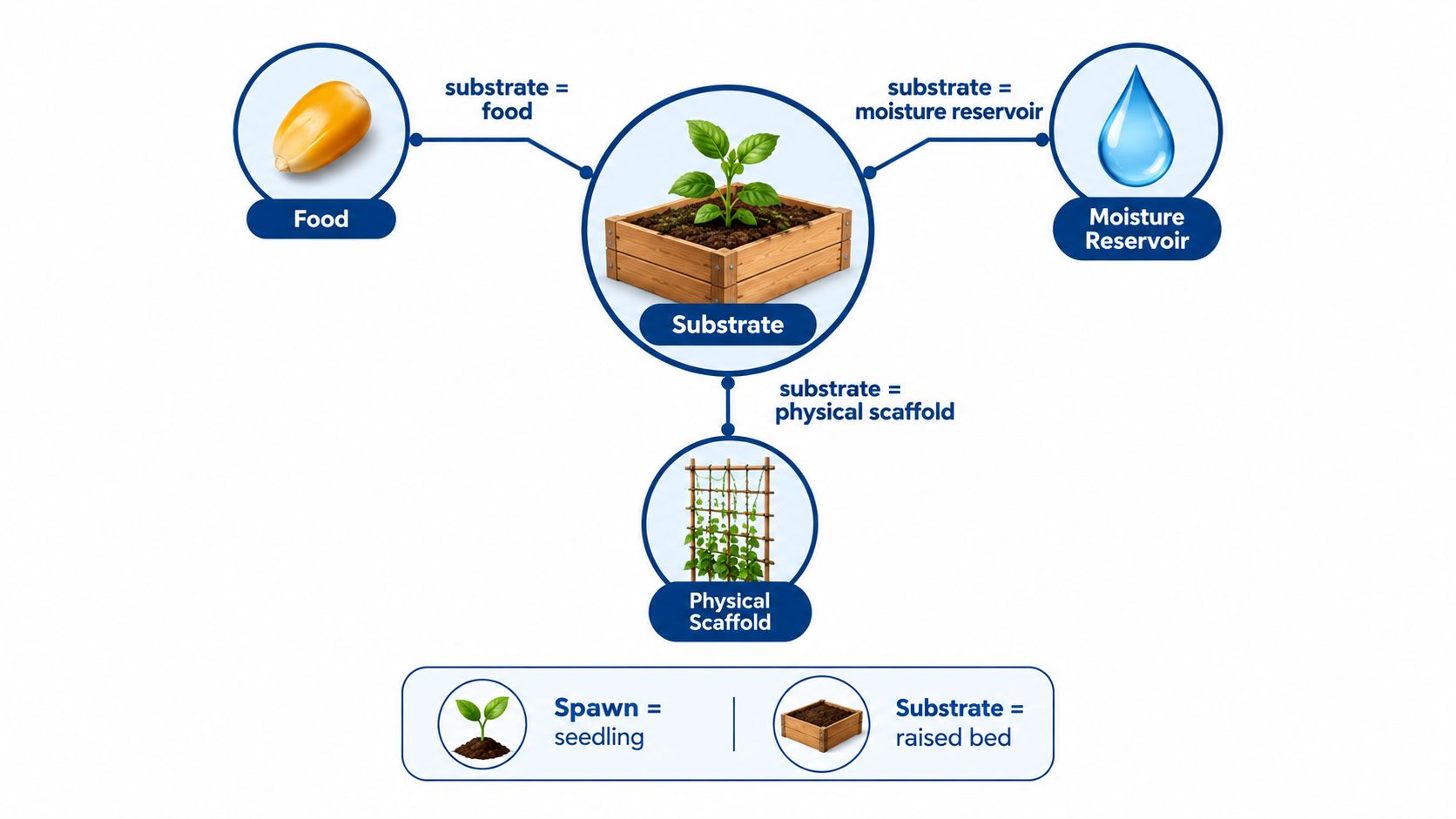
The main choices are pasteurized straw, hardwood sawdust and pellets, waste-based materials such as coffee grounds, and supplemented mixes containing bran or other nutrient sources. Each combines a material with a preparation method and a different contamination risk. For a broader comparison of common mushroom substrate options, judge whether the material can provide food, retain water, and keep air spaces after preparation. That balance matters more than an impressive ingredient list.
The Four Substrates Most Home Growers Reach For
These four options solve different problems. Straw prioritizes accessibility and forgiving preparation. Sawdust creates a durable block. Coffee grounds turn a household waste stream into an experiment. Supplements increase nutrition, but they raise the cleanliness requirements.
Straw
Chopped wheat or rice straw is the most approachable bulk material for many first grows. It's light, fibrous, widely available, and compatible with hot-water pasteurization. Historical and comparative research gives rice straw a strong position among oyster mushroom substrates. In one comparison, rice straw produced 151.8 g, while fresh sawdust produced 13.0 g and elephant grass produced 0.0 g (comparative substrate research).
Straw's main weakness is moisture management. Over-soaked straw breaks down quickly and leaves wet pockets where bacteria can multiply. Underprocessed straw may also carry a high contaminant load. Chop it into manageable pieces, heat-treat it, drain it thoroughly, and cool it before spawning.
Hardwood sawdust and pellets
Hardwood sawdust or untreated hardwood fuel pellets work well for growers who want a compact bag or bucket block. The material holds its shape and can produce dense fruiting surfaces. Sawdust alone can underperform compared with stronger agricultural residues, but the right wood species and preparation make it useful.
Supplemented sawdust is a different category from plain sawdust. Bran or another nitrogen-rich amendment improves the food balance, but the richer formula generally requires sterilization rather than simple pasteurization. Fine particles can also compact, so hydration and packing pressure matter.
Spent coffee grounds
Fresh coffee grounds offer convenience and a practical reuse route. Brewing applies heat, but that advantage fades as the grounds sit. Use grounds promptly, keep dairy, sweeteners, and other food waste out of the mix, and treat them as a high-risk material rather than a guaranteed shortcut.
The best role for coffee grounds is often as part of a tested blend. The comparative results above show that ratio changes performance, so don't assume that adding more coffee automatically improves the block.
Supplements and bran
Wheat bran, gram flour, soybean hulls, rapeseed meal, sugar beet pulp, and spent brewery grains can add nutrition to straw or wood. A 2023 study identified wheat straw at 60%, rice straw at 34%, and gram flour at 2% among a strong-performing formulation, with reported yields of 451.69 g and 452.33 g in the best treatments (supplementation study).
These ingredients work best as amendments, not as a standalone bulk bed. Nutrient-rich material can also accelerate contamination, especially when the mixture is wet, poorly sterilized, or handled in an unclean workspace.
Substrate | Prep Method | Cost | Yield Potential | Beginner Friendliness |
|---|---|---|---|---|
Straw | Hot-water pasteurization | Low | Reliable, with strong results on suitable straw | High |
Pasteurization when plain, sterilization when supplemented | Moderate | Moderate to high, depending on formula | Moderate | |
Fresh coffee grounds | Fresh collection, draining, and careful mixing | Low | Variable and ratio-dependent | Moderate for small experiments |
Bran or other supplements | Mixed into a base and sterilized when nutrient-rich | Moderate | Can materially improve output | Lower |
The yield comparison between substrates is not theoretical. Another study reported 183.1 g on composted sawdust from Triplochiton scleroxylon, compared with 151.8 g on rice straw, 111.5 g on banana leaves, 87.8 g on maize stover, 49.5 g on corn husk, 23.3 g on rice husk, and 13.0 g on fresh sawdust (oyster substrate comparison). The practical lesson is simple: plant waste varies widely, so test one dependable material before building a complicated blend.
Prep Methods and a Simple Recipe to Start With
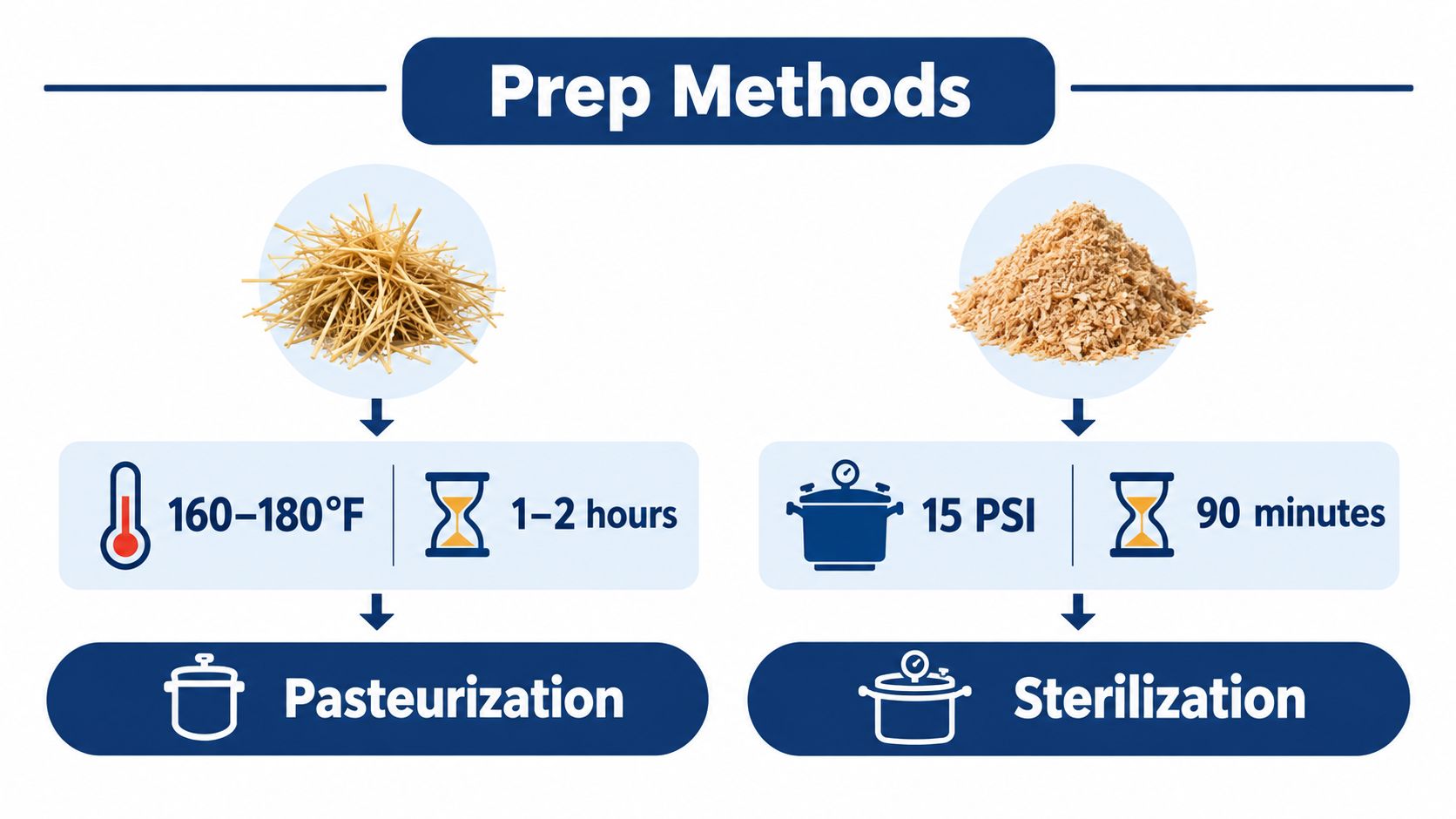
Preparation separates a useful substrate from a contaminated one. Pasteurization reduces competing organisms without trying to make the material completely sterile. Sterilization uses greater heat and pressure to create a much cleaner starting point, which becomes important when you add concentrated nutrients.
Straw through pasteurization
For chopped straw, use a hot-water bath at 160 to 180°F for 1 to 2 hours. Keep the straw submerged, then drain it thoroughly. It should drip only a few drops when squeezed, not release a steady stream.
Sawdust and straw hold heat longer than you expect. Spread the material out or place it in a clean container until it reaches room temperature. Spawning hot substrate can kill the mycelium before colonization begins, so cooling isn't a minor detail.
A practical straw bag workflow
For a 5-pound straw bag, follow this sequence:
Chop the straw. Aim for pieces about 1 to 3 inches long so the spawn has frequent contact points without turning the substrate into a compact mat.
Heat-treat it. Submerge the chopped straw in the hot-water bath, maintaining the preparation range described above.
Drain and cool. Wait until the material reaches room temperature. Don't mix in spawn while the straw is still warm.
Combine cleanly. Mix the prepared straw with grain spawn at roughly 10% to 20% of the substrate weight for a beginner-friendly starting range.
Pack the bag. Fill a suitable grow bag evenly without compressing the straw into an airless brick.
Seal and label. Write the date and strain on the bag so you can track colonization and compare future batches.
The guide to pasteurizing mushroom substrate can help you refine the hot-water process. For a visual comparison of the two preparation routes, watch the embedded demonstration below.
For supplemented sawdust, use a pressure cooker at 15 PSI for 90 minutes. Allow the block to cool fully before inoculation, and handle the cooled bag as a clean object. The more nutrients you add, the less forgiving a shortcut becomes.
Supplementation and Why It Is Not Always a Free Win
Supplementation adds a concentrated nutrient source to a base such as straw or hardwood sawdust. Wheat bran, soybean hulls, alfalfa, gram flour, rapeseed meal, and similar materials can improve the carbon-to-nitrogen balance, giving oyster mycelium more accessible food.
That extra food changes the contamination equation. A plain straw block is a simple pantry. Bran-enriched straw or sawdust is a stocked pantry, and competing molds can use it too if sterilization, sealing, or handling is weak. Beginners often gain more from a clean, repeatable plain block than from a richer formula that fails unpredictably.
A study of agri-food waste examined oyster mushroom cultivation using materials such as wheat straw, beech sawdust, rapeseed meal, sugar beet pulp, wheat bran, and spent brewery grains. Its practical lesson is to assess the complete formula: structure holds air, nutrients support growth, moisture controls texture, and preparation determines how many competitors survive.
Common supplements compared
Amendment | Typical Rate | Yield Impact | Contamination Risk |
|---|---|---|---|
Wheat bran | Use modestly in a tested base formula | Can improve nutrition and output | High if the block isn't sterilized thoroughly |
Soybean hulls | Combine with a suitable wood base | Can support a richer fruiting block | High because of concentrated nutrition |
Alfalfa | Use cautiously as a nutrient amendment | May improve growth when balanced with the base | High, especially in wet mixes |
Gypsum | Use as a structural or mineral additive, not a primary food source | May improve handling and physical balance | Lower nutritional risk than bran, though poor hydration still causes problems |
Yield cannot be assigned to every supplemented recipe with one universal percentage. Formula and species matter. In one research treatment set, wheat straw with cowpea produced 256 g per bag for Pleurotus florida, while wheat straw alone reached the highest biological efficiency reported there, at 67.5% (supplementation research).
Decision rule: supplementation makes the most sense after you can reliably produce clean plain-straw blocks.
Choose enriched sawdust for indoor fruiting blocks when you have dependable sterilization equipment and a clean inoculation routine. Outdoor experiments, first grows, and workspaces where bags are opened often favor simpler substrates. They reduce the number of variables, making it easier to identify whether moisture, spawn, or contamination caused the result.
Contamination Risks and Troubleshooting by Symptom
Contamination rarely announces itself politely. A bag can look healthy from one side while a wet pocket or hidden mold develops inside. Check your bags without repeatedly opening them, and separate anything suspicious from healthy cultures as soon as you notice a change.
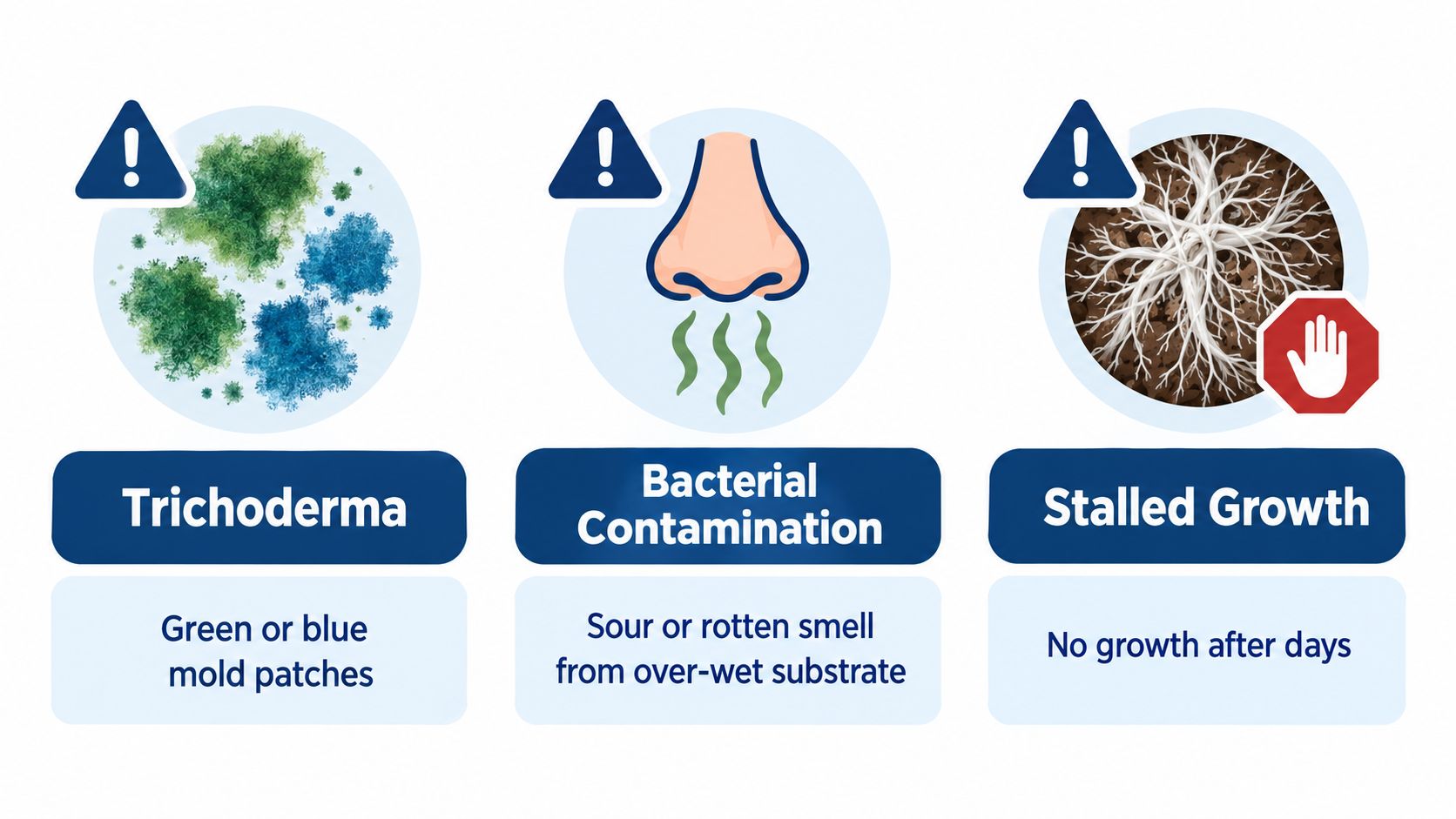
Green or blue patches
Green patches usually point to Trichoderma, while blue coloration can indicate mold or stressed mycelium that needs closer inspection. Don't try to rescue a spreading contaminated bag indoors. Seal it, move it outside, and discard it away from the rest of your grow area.
If you manage a larger growing space, the broader principles in this resource on mold remediation for facility managers are more relevant to facility-scale cleanup than to a single home bag, but they reinforce the same priority: isolate the problem before it spreads.
Sour or rotten smell
A sour, rotten, or unusually fermented odor often indicates bacterial contamination. Excess water is a common contributor because it removes air space and creates conditions where bacteria can outcompete the mushroom.
Don't open a questionable bag beside your clean spawn. Discard it, then adjust the next batch by draining longer and checking the squeeze test before inoculation.
Stalled colonization
A bag that shows no visible progress may have been spawned while the substrate was too hot, or the spawn may be old or inactive. Cold conditions can also slow growth, though a complete lack of change deserves closer inspection.
Give the next batch fresh spawn, fully cooled substrate, and stable placement. Avoid constantly disturbing the bag, because every opening creates another opportunity for contaminants to enter.
Before spawning, run this short checklist:
Clean hands: Wash thoroughly and use clean gloves when appropriate.
Wiped surfaces: Sanitize the work surface and tools before handling cooled substrate.
Fresh spawn: Use vigorous spawn with no suspicious odor or discoloration.
Cooled substrate: Confirm that the material is at room temperature.
Separated bags: Keep questionable material away from healthy cultures.
Early isolation protects the rest of the grow. One contaminated bag is a setback. A contaminated workspace can become a repeating pattern.
Matching the Right Substrate to Your Setup
Your best substrate depends less on ambition than on what you can control. If you're growing oysters for the first time, start with straw. It's easy to chop, works with a pot or other simple hot-water setup, and doesn't require the same sterilization burden as a nutrient-enriched sawdust block.
Sawdust or hardwood pellets make more sense when you already have pressure-cooking equipment, want a denser block, or plan to repeat the process with consistent materials. Supplemented hardwood belongs later in the learning curve because its higher nutrition raises the cost of a failed preparation.
Coffee grounds suit a small experimenter with a steady supply of fresh grounds. They're not ideal for someone who collects a container over several days and leaves it at room temperature. If you choose coffee, control freshness, moisture, and the blend ratio rather than treating it as a free replacement for straw.
Colorado Cultures offers sterilized grain bags, all-in-one grow bags, substrates, grow kits, and tools, along with educational materials for people who want a prepared starting point instead of mixing every component themselves. Whichever route you choose, substrate selection is only the beginning. Fruiting depends on suitable humidity, fresh-air exchange, and light, so plan those conditions before the block finishes colonizing.
Start with one manageable straw block, record the strain, preparation method, moisture feel, and colonization outcome, then adjust one variable at a time. When you're ready for prepared supplies or a next-step substrate experiment, visit Colorado Cultures to explore grain spawn, substrates, grow bags, kits, and practical mycology education.
Comments