
Peat Moss Bags for Mushrooms: A Practical Guide
You're standing in a garden center with a compressed bag of sphagnum peat moss in one hand and a colonized mushroom block at home. The label talks about gardens, seedlings, and moisture, but not casing layers. The obvious question is whether this material belongs in a mushroom operation at all.
The answer depends on what you're growing, how you're fruiting it, and how quickly your environment dries or stays humid. Peat can be an excellent casing ingredient, but it isn't a universal mushroom substrate. Used in the wrong situation, it holds too much water, complicates pH management, or creates an environmental trade-off you may not be comfortable accepting.
What Peat Moss Bags Are and Why They Matter
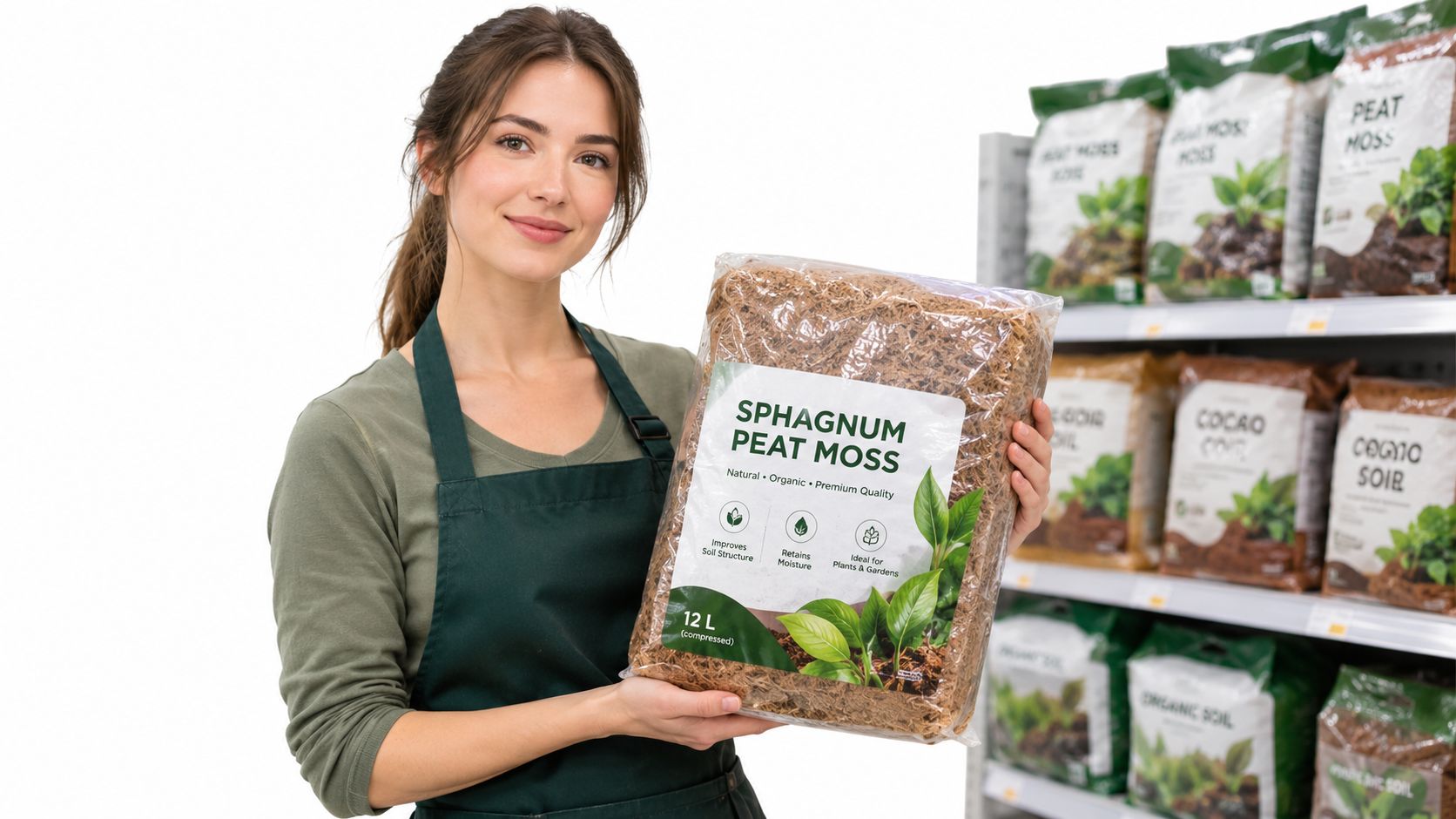
A first-time grower usually encounters peat moss as a dry, compressed brick or bag rather than as loose bog material. The product has been processed for horticultural use, then milled, dried, compressed, and packaged so it can be transported and stored efficiently. A helpful overview of its garden applications is available in this guide to peat moss for garden soil.
That retail format can be misleading. A peat moss bag isn't just “soil in a bag,” and it shouldn't be treated like compost or a nutrient-rich potting mix. Sphagnum peat moss is low in nutrients, physically absorbent, and structurally useful, which is why growers often use it as a casing layer rather than as the main food source for mushroom mycelium.
What the material does in a casing layer
A casing layer sits above fully colonized substrate. It isn't there to feed the organism in the same way that grain, supplemented sawdust, or another nutritious substrate does. Its job is to create a stable, moist surface that supports the transition from vegetative growth to fruiting.
Peat performs that job through three useful characteristics:
Moisture storage: Properly hydrated peat can supply moisture to the surface without immediately collapsing into mud.
Low nutrient content: It creates a relatively lean fruiting environment, which helps separate casing function from substrate nutrition.
Fine structure: Milled peat can form an even layer across a block or bed, reducing dry pockets and exposed substrate.
That balance is why a peat moss bag can be valuable for certain specialty mushroom grows. The material holds water, but it can still retain enough pore space for gas exchange when prepared correctly. It also remains workable after compression and rehydration, allowing a grower to produce a consistent casing texture instead of scattering irregular pieces across the substrate.
Practical rule: Treat peat as a moisture-management and fruiting tool, not as a complete mushroom food source.
The distinction matters because many failed grows start with the wrong expectation. Adding dry peat directly to a colonized block won't automatically trigger fruiting, and using an unadjusted garden product can introduce avoidable pH and moisture problems. The bag is only the starting material. Your preparation determines whether it becomes a useful casing or a dense, overly wet layer.
Where Peat Moss Comes From and How It Reaches Your Shelf
Peat moss bags reflect a global agricultural supply chain, not a local garden input. U.S. Geological Survey data estimated world peat production at 31.9 million metric tons in 2019, with Finland, Germany, Sweden, Belarus, Latvia, Ireland, and Canada accounting for 84% of that total, as summarized in this USGS-based peat market overview.
That concentration explains why availability and pricing can shift even when demand from individual growers appears steady. Regional harvest conditions, transport capacity, seasonal production, and processing schedules all influence what reaches retail shelves. A bag bought in a Denver garden center may represent extraction in northern peatlands, followed by drying, milling, compression, packaging, and distribution across several commercial stages.
Why Canada matters to American growers
Canada is a particularly important source for the United States. A Canadian industry report states that Canada produces more than 65% of the sphagnum peat moss used in the United States. A separate peat market supply summary describes Canadian annual harvests of roughly 12–15 million cubic metres, compared with 8–10 million cubic metres from the Baltic region.
Harvesting is typically seasonal, from May through September. Processing doesn't stop when field harvesting pauses. Drying, milling, and compression can continue throughout the year, which helps explain why retail inventory often appears more stable than the harvest calendar would suggest.
What that means at the point of purchase
The processing chain creates useful consistency, but it doesn't make every bag identical. Products can differ in particle size, moisture content, degree of compression, pH treatment, and the presence of added materials such as vermiculite. A bag labeled for general gardening may not be formulated for mushroom casing.
Read the ingredient panel before buying. Avoid products that contain fertilizer, compost, wetting agents, or unidentified amendments when you need a clean, low-nutrient casing. The most useful bag is usually the one with a short, clear ingredient list and enough information to tell you whether you're buying plain peat or a premixed growing medium.
How Peat Moss Compares to Coir and Other Substrates
Peat is often the first material growers hear about for casing, but it shouldn't be the automatic choice. Coir is renewable and often easier to justify environmentally, while peat can provide a dense, moisture-stable texture that performs well in specific fruiting systems. Vermiculite has a different role altogether. It improves structure and moisture distribution, but it usually works better as a companion material than as the sole casing ingredient.
For readers comparing coir preparation methods, this practical resource on coir for gardening from Little Green Leaf offers useful background on how the material behaves. Mushroom growers can also review this guide to using coco coir bricks before deciding whether the extra preparation fits their workflow.
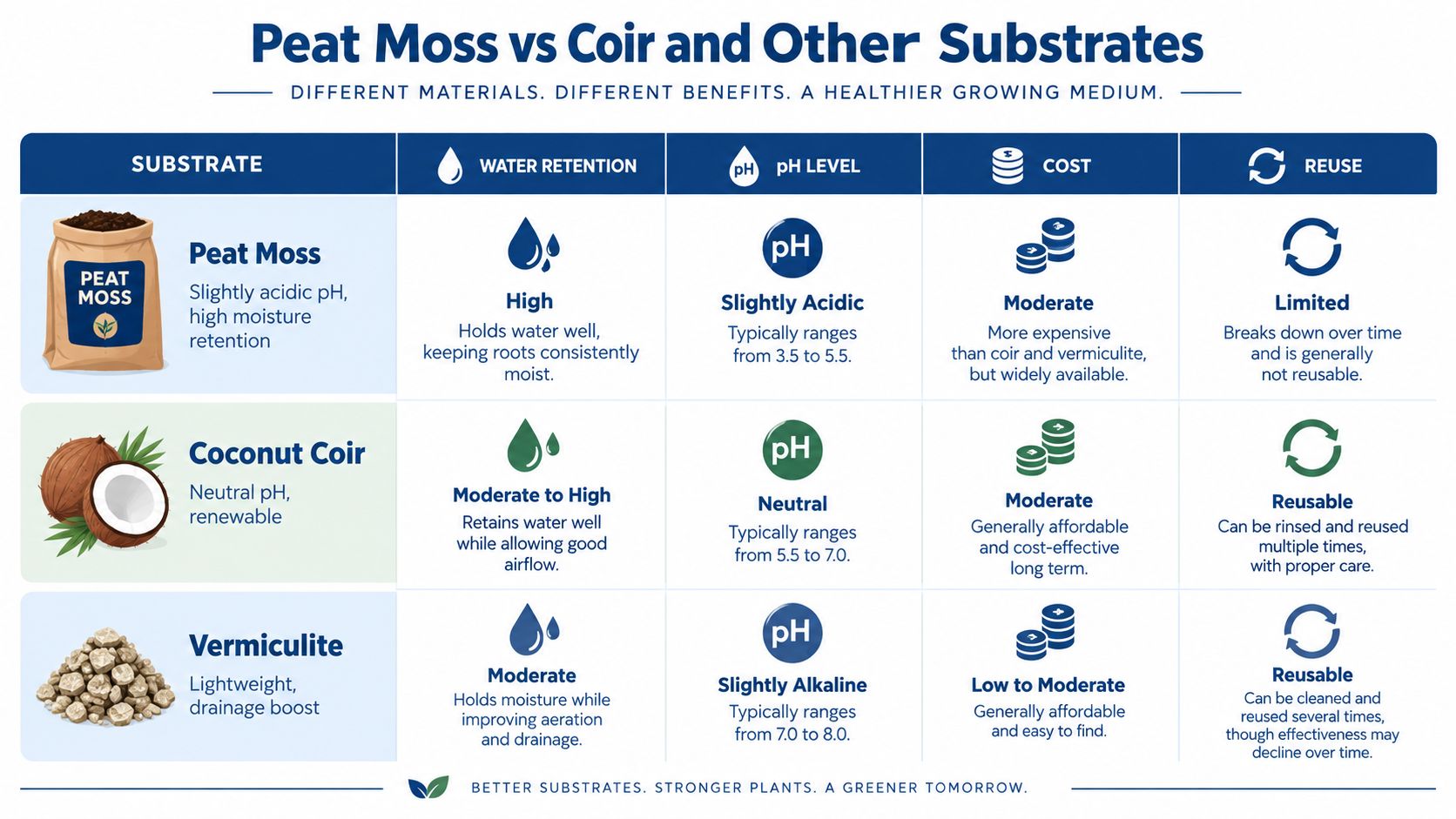
Substrate Comparison for Mushroom Cultivation
Material | Water Retention | pH Range | Best For | Sustainability |
|---|---|---|---|---|
Peat moss | Very high when hydrated, with a fine, stable texture | Naturally acidic and usually requires adjustment | Casing layers where moisture stability and low nutrients matter | Extracted from slow-forming peatlands |
Coconut coir | High, with a springier and more fibrous structure | Generally closer to neutral than raw peat | Peat-reduced casing blends, dry environments, and growers prioritizing renewable inputs | Made from coconut fiber and generally considered renewable |
Vermiculite | Holds moisture while improving air space and texture | Usually used as a structural amendment rather than the main pH controller | Drainage support, texture correction, and blended casing materials | Mineral material with limited reuse in contaminated systems |
Match the material to the grow
A grower working with a shallow fruiting bed in a dry room may value peat's ability to stay evenly moist. The same material can be frustrating in a humid room where evaporation is already slow. Coir may be easier to manage there, particularly when blended with a material that opens the structure.
Species and method matter too. A casing-dependent grow benefits more from a fine, moisture-holding surface than a simple top-fruiting block that only needs controlled humidity. Oysters grown from exposed blocks often don't need a peat casing at all. A specialty mushroom grown in a bed or casing-based system may benefit much more.
Choose the material that corrects your limiting factor. If the surface dries first, prioritize moisture storage. If it stays saturated, prioritize air space and faster drainage. If sustainability is the deciding factor, test coir before assuming peat is necessary.
Don't compare materials only by purchase price. A cheaper bag that stays wet, compacts, or requires repeated correction can cost more in failed batches and extra labor. The best choice is the one that gives your species the surface conditions it needs with the fewest interventions.
Preparing and Sterilizing Peat Moss Bags for Use
Raw peat is not ready to use just because it came from a sealed bag. It's naturally acidic, and compressed material can hydrate unevenly. Preparation should produce a casing that is evenly moist, loose enough to exchange air, and chemically closer to the range your crop can tolerate.
Sphagnum peat moss has unusually high water-holding capacity. Extension and university material reports values ranging from about 60% of volume to roughly 20–30 times its dry weight, with typical pore-space values around 87–95%, as documented in this technical reference on peat properties.
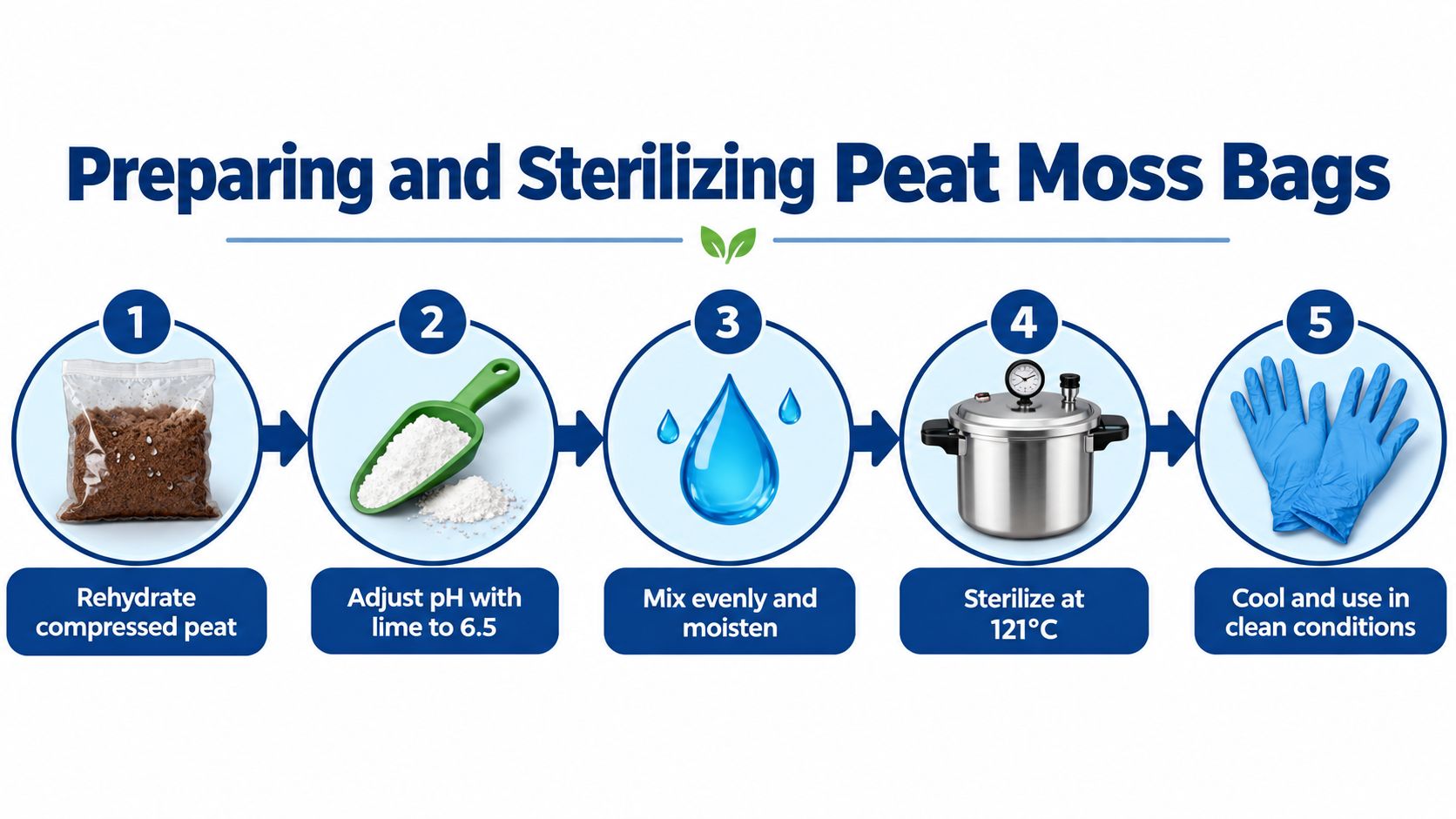
A workable preparation sequence
Break up the compressed material. Empty the bag into a clean tub and pull apart dense clumps by hand. Dry cores often resist water, while loose outer material becomes wet quickly.
Add water gradually. Mix in water in stages rather than flooding the entire batch. Stop when the peat is uniformly damp and fluffy. A handful should hold together when squeezed, but it shouldn't release a stream of water.
Correct the acidity. Recommended lime additions for moving peat toward a crop-friendly range are approximately 8–20 kilograms per cubic metre, or 14–35 pounds per cubic yard, according to the technical source above. Use a scale, distribute the lime thoroughly, and avoid dumping it into one pocket.
Blend in structural material if needed. Vermiculite can improve texture and moisture distribution when the peat feels too fine or dense. Don't use an amendment just because it is familiar. Add it to solve a specific texture problem.
Heat-treat the prepared casing when your protocol requires it. Place the moistened material in suitable heat-safe containers, process it according to your established equipment and safety procedure, and allow it to cool fully before application. Hot casing can damage mycelium, and opening warm containers encourages condensation and handling errors.
Moisture testing matters more than a recipe
The squeeze test is useful, but it isn't enough for every room or species. Spread a small sample on a tray and watch whether it remains cohesive or begins to pool. If water collects beneath the sample, the batch is too wet. If the surface breaks apart immediately after a light touch, it needs more hydration.
Keep the casing covered after preparation and handle it with clean tools. Sterilization won't compensate for careless cooling, dirty containers, or repeated exposure while you work. The cleanest protocol is the one that minimizes transfers between preparation and application.
Which Mushroom Species Benefit Most from Peat Casing
Peat casing makes the most sense for mushrooms that fruit more reliably when the surface stays evenly moist but nutritionally restrained. Oysters, specialty Pleurotus varieties, and shiitake can all appear in peat-casing discussions, but the exact benefit depends on the grow method rather than the species name alone.
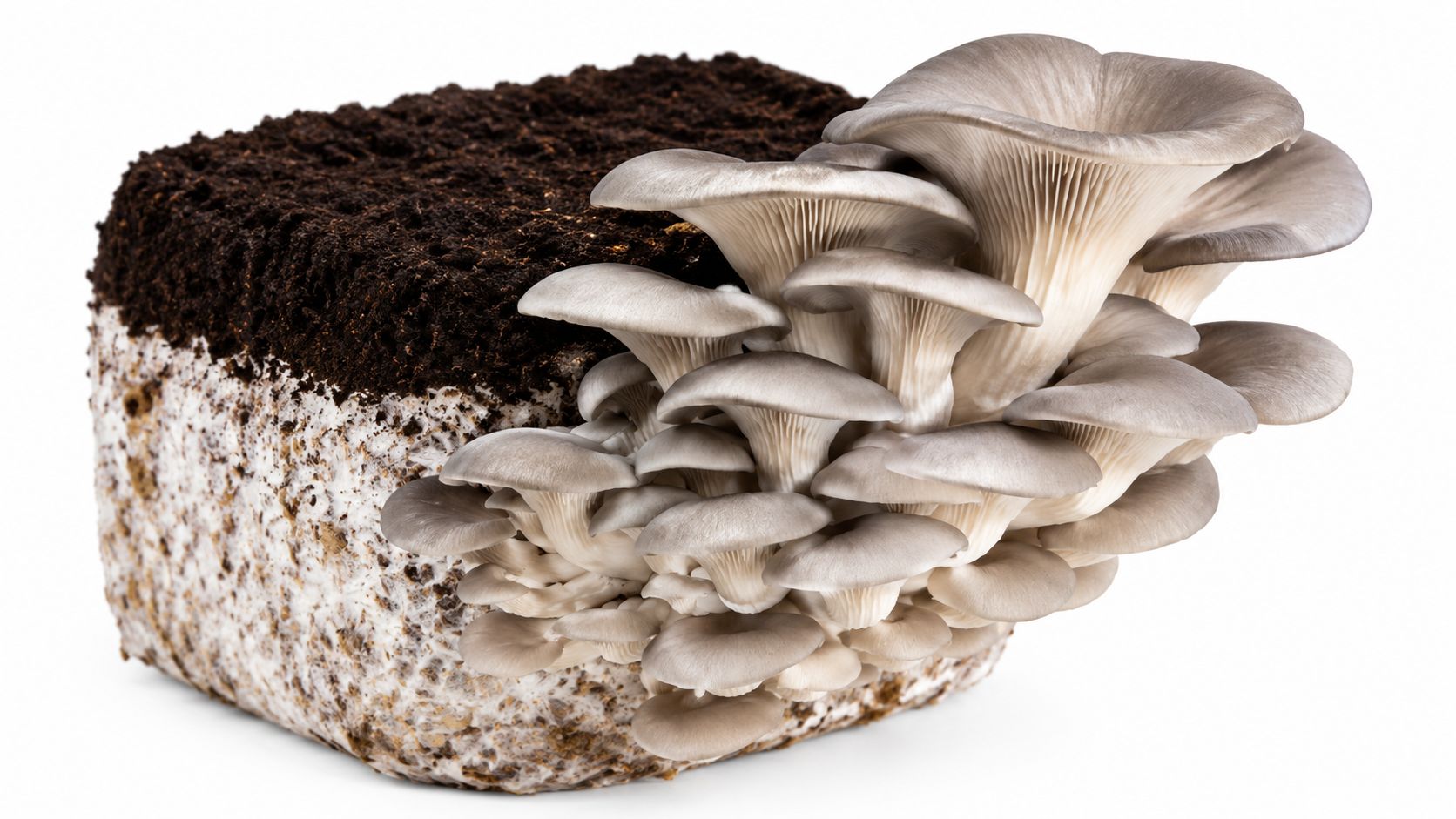
An oyster grower fruiting from a fully colonized block may not need peat at all. If the block already maintains adequate surface moisture and the fruiting chamber provides reliable humidity, adding a casing can create an unnecessary wet layer. In contrast, oysters grown in a bed-style system may benefit from a thin, even surface that reduces rapid drying and gives developing pins a more stable microclimate.
Pleurotus cornucopiae and other specialty oysters can be less forgiving when the surface alternates between dry and saturated. A peat-based casing may help when the grower needs moisture to remain available across the surface, but the layer still needs to be loose. A compacted casing can limit gas exchange and encourage stagnant conditions.
Shiitake and other casing-dependent systems
Shiitake often rewards patience and careful surface management. A casing layer can support a controlled fruiting transition when the underlying substrate and environmental conditions are already correct. It won't rescue a block that hasn't fully colonized, and it won't replace appropriate temperature, humidity, or fresh-air management.
Portobello-style systems are a more obvious example because the casing is part of the fruiting method itself. In that context, peat works because it provides a low-nutrient, moisture-holding surface rather than because it feeds the mushroom.
This video gives a visual reference for how casing fits into a mushroom cultivation workflow:
When peat is the wrong tool
Avoid reaching for a peat moss bag just because a grow has stalled. If the surface is dry, first check humidity, air movement, container design, and watering technique. If the surface is persistently wet, coir or a more open blend may be easier to control.
The practical test is straightforward. Use peat when you need an even, low-nutrient moisture reservoir and can manage its acidity. Skip it when your method doesn't need casing, your climate already supplies excessive humidity, or a renewable alternative performs well enough for your goals.
The Sustainability Trade-Off of Using Peat Moss
Peat can produce a reliable casing surface, but cultivation performance is only one part of the decision. Peatlands are carbon-rich ecosystems, and harvested peat forms extremely slowly. Peat is nonrenewable on human timescales, while peatlands also store significant carbon, as outlined in this examination of peat use in organic gardening and our guide to peat moss and organic gardening.
That creates a practical sustainability trade-off for mushroom growers. Peat holds moisture and forms a workable, low-nutrient surface, which explains its value in casing-dependent systems. Those useful properties do not remove the ecological cost of extraction. The right question is whether the function justifies using a slow-forming material for your species, method, and operating conditions.
Responsible sourcing has limits
A transparently sourced product can provide better information about origin, restoration, and harvesting practices. It does not make peat rapidly renewable. Check whether the manufacturer identifies the source, explains restoration practices, and provides specific product information instead of relying on vague environmental language.
Sourcing is only one part of the comparison. Coir may reduce reliance on peat, but it can require a different preparation routine. A coir casing may need a longer pre-soak and a coarser blend to maintain suitable air space and drying behavior. Run one comparable tray with each material before changing a full bed, especially when working with a species or climate you have not tested.
The responsible decision is knowing when peat provides a function you genuinely need, and when another material can meet that requirement.
Use a controlled trial rather than relying on assumptions. Keep the species, container, and environmental conditions consistent, then compare peat with a coir or peat-reduced option. Record surface moisture, pin development, contamination, and handling effort. Those observations show whether peat improves results enough to justify its sourcing cost, or whether a lower-impact material performs adequately for the operation.
Making the Right Choice for Your Growing Operation
A tray that dries between misting cycles may benefit from peat casing. A top-fruiting block with exposed sides may not. Choose the material after you define the fruiting method, species, and room conditions, not before you fill a shopping cart.
Use this checklist:
Species: Does the mushroom fruit better with a stable casing layer, or directly from the block?
Method: Are you managing a bed, tray, or top-fruiting block?
Climate: Does the room dry surfaces quickly, or hold moisture for extended periods?
Texture: Do you need a fine casing, or would fibrous coir provide more air space?
pH management: Can you measure and distribute lime evenly?
Sourcing priorities: Will peat's performance justify using a slow-forming material when coir may meet the same need?
Consistency: Can you prepare, cool, and apply the casing under clean conditions?
Peat products vary in particle size, moisture behavior, and preparation requirements. Compare the ingredient label and texture before committing to a full run. Organic certification addresses production standards, while sourcing transparency addresses origin and environmental practices. Neither answers the other question.
Run a small trial first. Keep the species, container, casing depth, and room conditions comparable, then change one variable at a time. Record surface moisture, pin development, contamination, and handling effort. Those observations show whether peat improves the crop enough to justify its environmental cost, or whether coir performs adequately in your operation.
If you need sterilized grain, prepared substrates, or all-in-one grow bags while testing your casing strategy, prepared substrates and all-in-one grow bags are available from Colorado Cultures, along with cultivation supplies and instructions.
Colorado Cultures supplies sterilized grain bags, substrates, all-in-one grow bags, grow kits, and tools for home and laboratory cultivation. Visit Colorado Cultures to review the available supplies and plan your next casing trial.
Comments