
Dried Black Trumpets: How to Rehydrate, Cook and Store
You've got a small bag of dried black trumpets, they look like dark crumpled paper, and you're not sure whether to treat them like fresh mushrooms, a spice, or something in between. That's the normal starting point. Treat them as a concentrated seasoning you measure in grams, soak them with care, and keep the soaking liquid as stock. Do those three things and the rest gets much easier.
What Dried Black Trumpets Are and Why They Taste So Intense
Say a home cook adds a generous handful of fresh black trumpets to a cream sauce and ends up with something pale and bland. The next week she tries a pinch of dried ones instead, and the same sauce turns deep, smoky, and earthy. Nothing else changed. The difference is water.

Dried black trumpets are the dehydrated fruiting bodies of Craterellus cornucopioides, called the horn of plenty. It's a funnel-shaped wild mushroom with a hollow stem and a dark gray-black color. Think of a stock cube beside a pot of stock. Roughly most of the water leaves, so much of the same flavor packs into a fraction of the weight, and a little goes a long way.
What you'll actually taste
In plain terms, expect woody and brown notes first, with a cardboard-like background that's normal for dried mushrooms. A published mushroom flavor lexicon characterized dried black trumpet with woody, brown, cardboard, burnt-ashy, bitter, sweet-aromatic, sour, and astringent attributes, with bitterness at 5.4 and burnt-ashy notes at 2.2. That clear bitter edge stands out most, there's a faint sweet aroma behind it, and a small burnt-ashy note can show up if pieces were dried hard or you cook them too hot.
Start small: Bitterness rewards restraint. You can add more mushroom at the end, but you can't take bitterness out of a finished sauce.
The thin flesh dries easily, which is why drying is the traditional way to stretch a seasonal wild harvest across the year. It's also why dried black trumpets aren't a one-for-one swap for fresh. Weigh them in grams, start with a small amount, and increase gradually once you've tasted what that amount does in your dish.
How to Rehydrate Dried Black Trumpets Step by Step
Pick your soak by what you're cooking, not by habit. Whole pieces keep their shape in a sauce, chopped pieces disappear more evenly into a sauté, and a cold soak protects texture when you're not in a hurry.
Use or form | Dried weight | Water and temperature | Soak time |
|---|---|---|---|
Whole pieces for sauces | 30 g (1 oz) | 500 ml warm water | 20-30 minutes |
Chopped pieces for sautés | 30 g (1 oz) | 375 ml warm water | 15-20 minutes |
Cold soak for gentle texture | 30 g (1 oz) | 500 ml cold water | 2-4 hours |
Large batch overnight | 30 g (1 oz) per 1 liter | 1 liter cold water, refrigerated | 8-12 hours |
The flow below matches that table, so you can keep it open beside the bowl while you work.
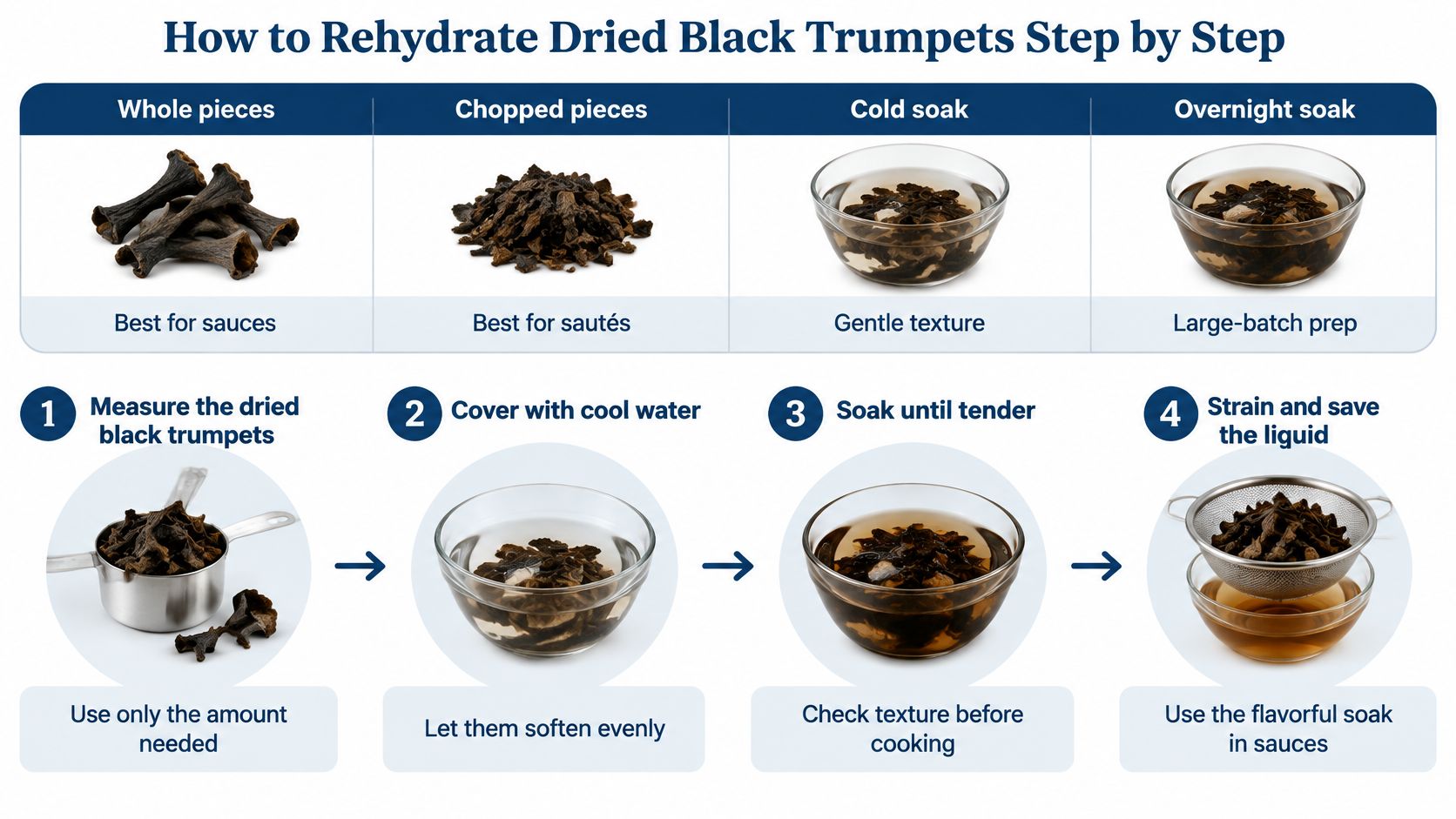
The eight steps and why each matters
Brush dry pieces first. Use a soft brush or dry cloth to knock off forest debris and grit while the pieces are still dry, because grit is easier to remove before it turns to mud in water.
Check and discard. Look for mold, insect holes, and smoke-like or sour smells, and throw away any piece that shows them. Soaking won't fix a spoiled piece.
Soak submerged. Cover with the warm or cold water listed above and set a small plate on top so floating pieces stay under. Dry tips that stay above water stay leathery.
Lift, don't pour. Lift pieces out with your fingers or a slotted spoon, leaving grit settled in the bottom of the bowl. Pouring through a colander dumps that grit right back over them.
Rinse briefly. Give them a quick rinse under cold water to remove surface dust. Keep it brief so you don't wash flavor away.
Squeeze and trim. Squeeze gently with your hands and snip off any tough stem ends with scissors. A hard squeeze tears the thin flesh.
Strain the liquid. Pour the soaking liquid through a coffee filter or clean cloth into a clean bowl. This is your stock, not waste water.
Use or hold. Cook the pieces right away, or refrigerate them in the strained liquid and use them within two days. After that, texture and aroma fade fast.
How you know it worked
A healthy result is plump, supple, and deep brown-gray, bending without snapping and without feeling slimy. If pieces still rustle or crack, give them a few more minutes and check again.
Don't leave them soaking all afternoon on the counter to be safe. Over-soaking dilutes flavor into too much water and turns the texture slimy, so keep to the time range for the method you picked. If you're interrupted, move the bowl to the fridge rather than letting it sit warm.
One common confusion is the dark color of the liquid. It should look like weak tea to dark broth and smell earthy, not sour. If it smells sharp or musty, discard both liquid and mushrooms and start with a fresh batch.
Identify and Vet Wild Black Trumpets Before You Cook
A dried batch can look reassuringly uniform: same dark curls, same earthy smell, same light weight in the hand. That sameness is the trap. Drying preserves a mushroom, and it also preserves a wrong name, so identity has to be settled while the pieces still have shape, before heat, butter, and soaking liquid turn them into dinner.
Black trumpets are wild-foraged, and regional taxonomy is complicated. Mushrooms once treated as one widespread species may represent several regional taxa, so a name that works in one place does not automatically settle identity in another. A small shelf of field guides and reference books for mushroom identification gives you more than a single phone photo to compare against.
A short gate before cooking
Shape and underside: Look for a hollow, funnel-shaped cap with a smooth or wrinkled underside rather than true, blade-like gills.
More than one source: Never rely on a single photo or app result, especially for a dark mushroom that hides against leaf litter.
Local confirmation: Have a regional expert or local mycological society confirm the species before cooking a personally foraged batch.
Keep doubtful pieces separate: Hold questionable specimens apart while you decide, since one mixed-in piece can season the whole pan.
For shoppers, the check is simpler. Buy a package that names the species and gives an origin, from a seller you can trace. Unlabeled bulk bins and mixed wild mushrooms with no lot information leave you guessing.
Correctly identified Craterellus cornucopioides is a widely eaten wild mushroom. Even so, a dark funnel shape is no safety guarantee by itself, because look-alikes can be dangerous and neither drying nor boiling neutralizes a poisonous species. If identity stays uncertain, discard the batch; a few grams of seasoning and one saved stock are never worth the gamble.
Flavor Pairings That Suit Dried Black Trumpets
The pairing logic is simple. Fat and cream soften the bitter edge, sweet aromatics balance woody notes, and herbs or fortified wine lift the earthiness. Build around that and most combinations work.
Start with butter. It softens bitterness and carries aroma across the tongue, which is why black trumpet butter works on steak or plain toast. Cream does a similar job in a pasta or chicken sauce, holding the aroma instead of letting it turn sharp.
Reliable building blocks
Cook shallot and garlic first as your sauté base, then add the mushrooms, so their sweetness is already in the pan. Thyme or sage suits roasted potatoes or pork, where you want a savory, woodsy note. Eggs in an omelet or frittata give mild richness that acts as a backdrop, letting a small amount of mushroom read clearly without dominating breakfast.
A splash of sherry or Madeira to deglaze the pan is especially useful. Fortified sweetness offsets bitterness and picks up the browned bits you'd otherwise leave behind. Beef, duck, chicken thighs, and pork are dependable partners, and grain dishes such as barley or farro absorb the soaking liquid well. If you're pairing mushrooms with meat in a skillet, cooking sausage with mushrooms from Just Cook It is a useful reference for timing, though you should use a milder sausage here so the trumpet flavor stays audible.
Where pairings fail
Heavy smoked meats and a lot of chili can bury dried black trumpets, so use them sparingly or skip them. Delicate white fish and light salads get lost the other way, with the mushroom taking over. Very high heat is its own failure case, because thin pieces scorch fast and turn burnt.
Taste the sauce before you finish it. Add more mushroom only if the flavor is shy, and add cream, butter, or a pinch of salt first if bitterness is leading.
Three Recipes That Show What Dried Black Trumpets Do
Each recipe below uses a different strength. One uses the pieces in sauce, one uses them as a seasoning in butter, and one leans on the soaking liquid as stock.
The spread here shows how the same mushroom looks dried, chopped, and finished in a dish, which helps when you're judging texture.
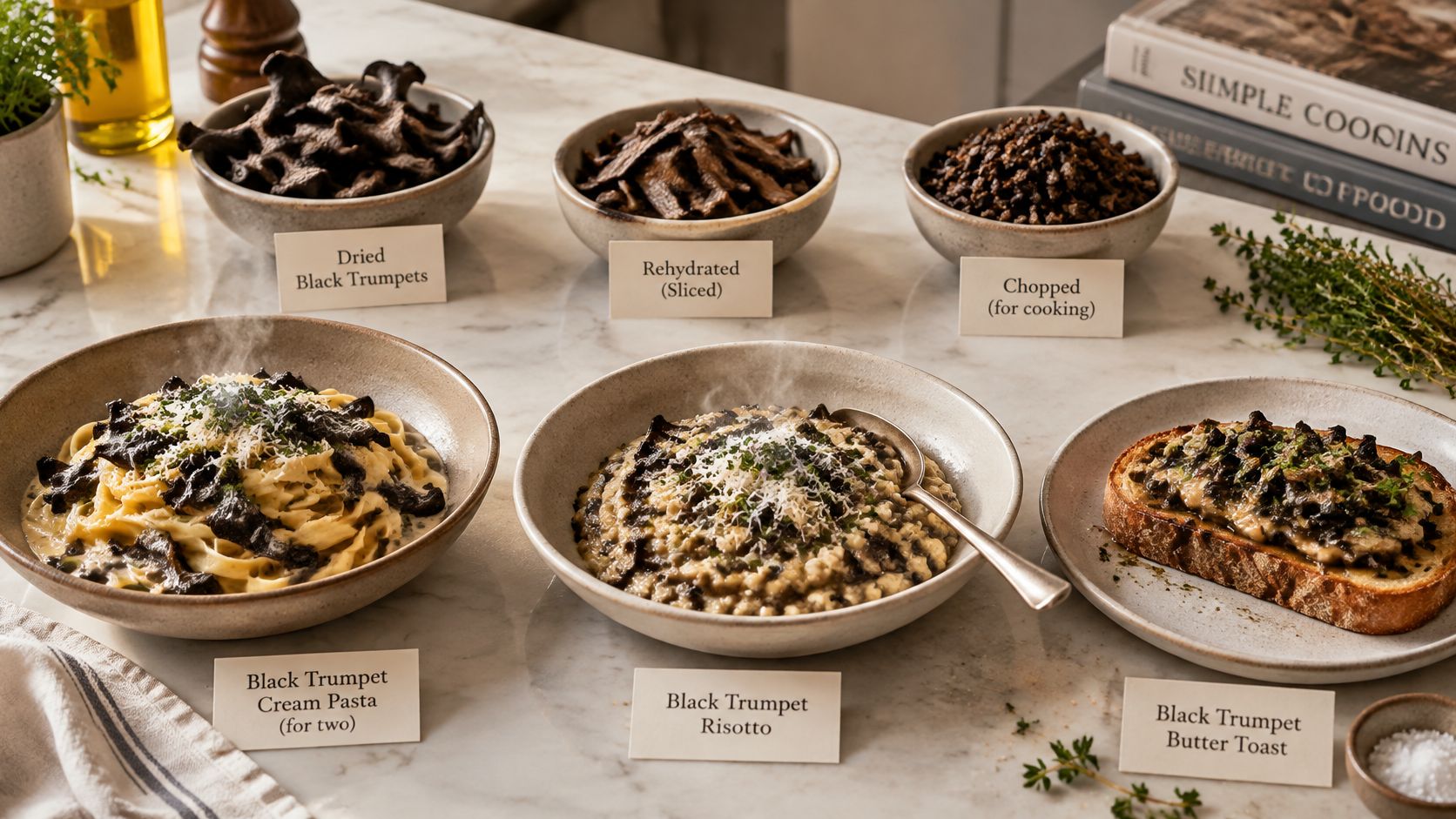
Black trumpet cream pasta for two
Soak 15 g dried black trumpets, chop them, and sauté for 2 minutes in butter with a minced shallot over moderate heat. Add the pieces with 60 ml strained soaking liquid, reduce by half, then stir in 120 ml cream. Toss with 200 g cooked pasta and grated parmesan, then salt to taste.
The mushroom gives depth and color, while cream keeps bitterness in the background. Watch the pan closely at the start, because chopped pieces burn at the edges before you smell it. If the sauce tastes bitter, add a spoonful more cream rather than more cheese.
Black trumpet butter for steak or fish
Finely chop 10 g rehydrated pieces and sauté them until the pan looks dry, then let them cool completely. Fold them into 100 g softened butter with a pinch of salt and fresh thyme leaves. Roll in parchment, chill until firm, and slice over steak or grilled fish.
This is the clearest example of dried black trumpets as seasoning. A thin slice melts into a sauce and flavors the whole bite. Don't fold warm mushrooms into butter, or the butter melts, separates, and turns greasy instead of holding a clean slice.
If you enjoy building a small library of wild mushroom dishes, these pheasant back mushroom recipes show a different texture and season, which makes the contrast with trumpets easier to understand.
The short video below is useful for watching pan timing and how little liquid you need before cream goes in.
Black trumpet risotto for four
Use 20 g dried pieces, soaked and chopped, and sauté them with chopped onion in butter. Replace one cup of stock with strained soaking liquid, then add rice and remaining stock gradually, stirring and letting each addition absorb. Finish with butter and a squeeze of lemon.
Here the liquid does most of the work, coloring every grain and spreading flavor evenly. Don't add all the soaking liquid at once if it tastes very strong in the bowl. Add half, taste the rice midway, and decide whether the rest helps or pushes bitterness forward. Lemon at the end brightens the dish without hiding the mushroom.
How Much Dried Black Trumpets Cost and How to Check Quality
One caveat before you compare these figures with a shop label. They are wholesale and benchmark prices, so a store price per gram will run higher once packing, shipping, and retail margins are added.
Market | 2024 price per kilogram | How to read it |
|---|---|---|
Global wholesale | $20.83-28.84 | Benchmark, not retail |
Small retail bag | Higher per gram | Reflects packing, shipping, and shop margin |
In 2024, global wholesale prices for dried black trumpet mushrooms ranged from $20.83 to $28.84 per kilogram, according to Tridge's dried black trumpet mushroom price data. Treat that range as a benchmark for judging whether an offer is wildly out of line, not as the sticker price on a 20 g bag.
The benchmark works like a recipe's oven temperature. It sets your expectations, but your own oven still needs checking. A bag priced far below the range is not automatically a bargain or a fake; it is a signal to inspect more carefully before you buy.
The visual checklist below turns the benchmark and the inspection steps into a quick in-store check.
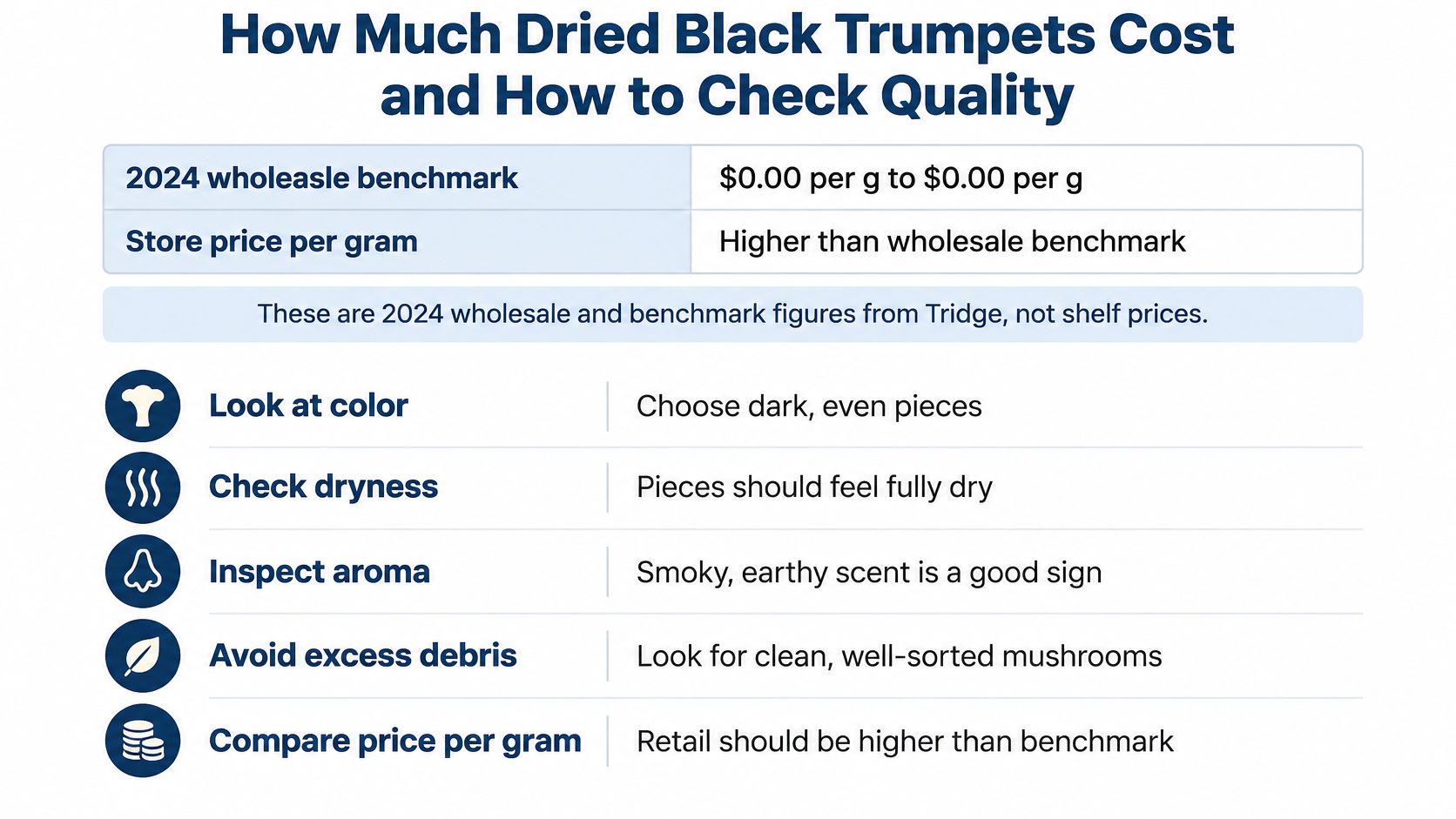
Price tracks market and origin, and short wild-harvest seasons keep supply and price volatile. A very cheap bag isn't automatically bad, but it deserves a closer look at sorting, cleanliness, and whether the species is named. Low prices sometimes mean heavy crumb content, mixed species, or stock that sat too long before drying.
What to check before you pay
Intact, even pieces: Choose pieces that are uniformly dark gray-black, not a mix of pale scraps and dust.
Clean bag bottom: Avoid lots of powder or crumbs at the bottom, which signals rough handling and old stock.
No mold signals: Skip pale, fuzzy, or damp-looking patches and any sour or musty smell through the seal.
Sealed and dated: Look for sealed packaging with a harvest or packing date.
Named origin and lot: Prefer a seller who names origin and lot, so you can trace the batch if something seems off.
Buy a small amount first to test flavor and quality before committing to a larger bag. Cook one simple sauce, note the grams you used, and strain the soaking liquid rather than pouring it off. A weak or dirty batch shows up fastest in that liquid, and a good one gives you a free mushroom stock on top of the mushrooms themselves. Only reorder in bulk if that test batch tasted clean and earthy.
How to Store Dried Black Trumpets for Months of Use
Your main enemies are moisture, light, heat, and air. A jar beside the stove fails on three of those, even if the lid fits well. Pick a method that limits all four, and label the container the day you fill it.
Storage method | Expected shelf life | Key precaution |
|---|---|---|
Airtight glass jar in a cool, dark pantry | 6-12 months | Keep away from light, heat and the stove |
Vacuum-sealed bag in a pantry | Up to 12 months | Remove as much air as possible |
Airtight container in the refrigerator | Up to 12 months | Bring to room temperature before opening to prevent condensation |
Airtight freezer bag or container | 1-2 years | Portion first so you open only what you need |
Label each jar with the purchase date and, if you know it, the origin. That one habit stops the common problem of finding an anonymous jar a year later and guessing. For broader pantry habits, this guide on how to store dried mushrooms covers containers and moisture control in more detail.
Check before every use
Musty or sour smell: Discard the batch, because storage odors won't cook off cleanly.
Green, white, or fuzzy growth: Throw it away rather than picking around visible mold.
Insect droppings or holes: Don't soak and hope, since contamination can run through the bag.
Faded aroma: The mushrooms may be safe but weak, so use them in stock rather than as the star.
Once a jar is opened and you're using it slowly, move small portions to the freezer. You'll open only what you need and protect the rest from repeated warm air.
If the mushroom smells like the forest after rain, it's still good. If it smells like a damp basement, let it go.
Pick a Substitute When Dried Black Trumpets Run Out
Choose by dish, not by whatever bag is on sale. A substitute that saves a soup can disappoint in a cream sauce, because each dried mushroom brings a different balance of nuttiness, fruit, and earth.
Substitute | Ratio | Best use | Caution |
|---|---|---|---|
Dried porcini | Three-quarters of the weight | Sauces and soups | Nutty and meaty, so rehydrate it the same way |
Dried chanterelles | Equal weight | Sautés and risotto | Fruitier and lighter, but the texture holds |
Dried morels | Equal weight | Cream sauces | Costlier, so use them only when the sauce is the star |
Dried mixed forest blend | Equal weight | Stocks and grain dishes | Only if the label names the mushrooms |
Fresh button mushrooms | Add a spoonful of porcini soaking liquid | Any dish needing depth | Lack depth on their own |
Dried porcini is your closest match for sauces and soups. It's nutty and meaty rather than smoky, so use about three-quarters of the weight you'd use for black trumpets and rehydrate it the same way, keeping its liquid too.
Dried chanterelles are fruitier and lighter. Use an equal weight in sautés and risottos, where their firmer texture holds up and their brightness is welcome. They won't give the same dark color, so don't judge the swap by appearance alone.
Dried morels bring an earthy, slightly sweet note that suits cream sauces beautifully. They cost more, so save them for a sauce that's the star of the meal rather than a background soup. A dried mixed forest blend works for stocks and grain dishes if the label names the mushrooms, because unnamed blends make repeat cooking impossible to learn from.
Fresh button mushrooms are the weakest stand-in. They add moisture and bulk but little depth, so add a spoonful of strained porcini soaking liquid to build the flavor they're missing. Without that help, the gap in flavor is immediately noticeable.
This week, pick one dish you already cook well and test a substitute in a small batch. Write down the grams, soak time, and whether you'd repeat it. Keep one jar of dried black trumpets for the dishes where they matter most, and let substitutes handle the everyday pots.
Ready to go deeper than buying dried mushrooms and start learning how fungi grow, fruit, and store well at home? Colorado Cultures offers mycology supplies, grow kits, substrates, and hands-on classes at its Lakewood and Englewood storefronts and online, with practical guidance for first-time growers and experienced hobbyists alike. Visit Colorado Cultures to browse supplies, check the classroom calendar, and get help choosing your next step.
Comments