
Mushroom Spawn Online: How to Buy and Store
You've found a spawn listing that looks right, but you're not sure what should arrive or whether you can use it before it goes bad. That's a reasonable concern: mushroom spawn is living material, and a good purchase still needs the right substrate, careful handling, and sensible storage.
Treat buying mushroom spawn online as one connected workflow, from matching the product to your setup through checking the bag and inoculating your substrate. The aim isn't to guarantee a perfect grow. It's to catch avoidable problems early and make a first order you can learn from.
What Mushroom Spawn Actually Is
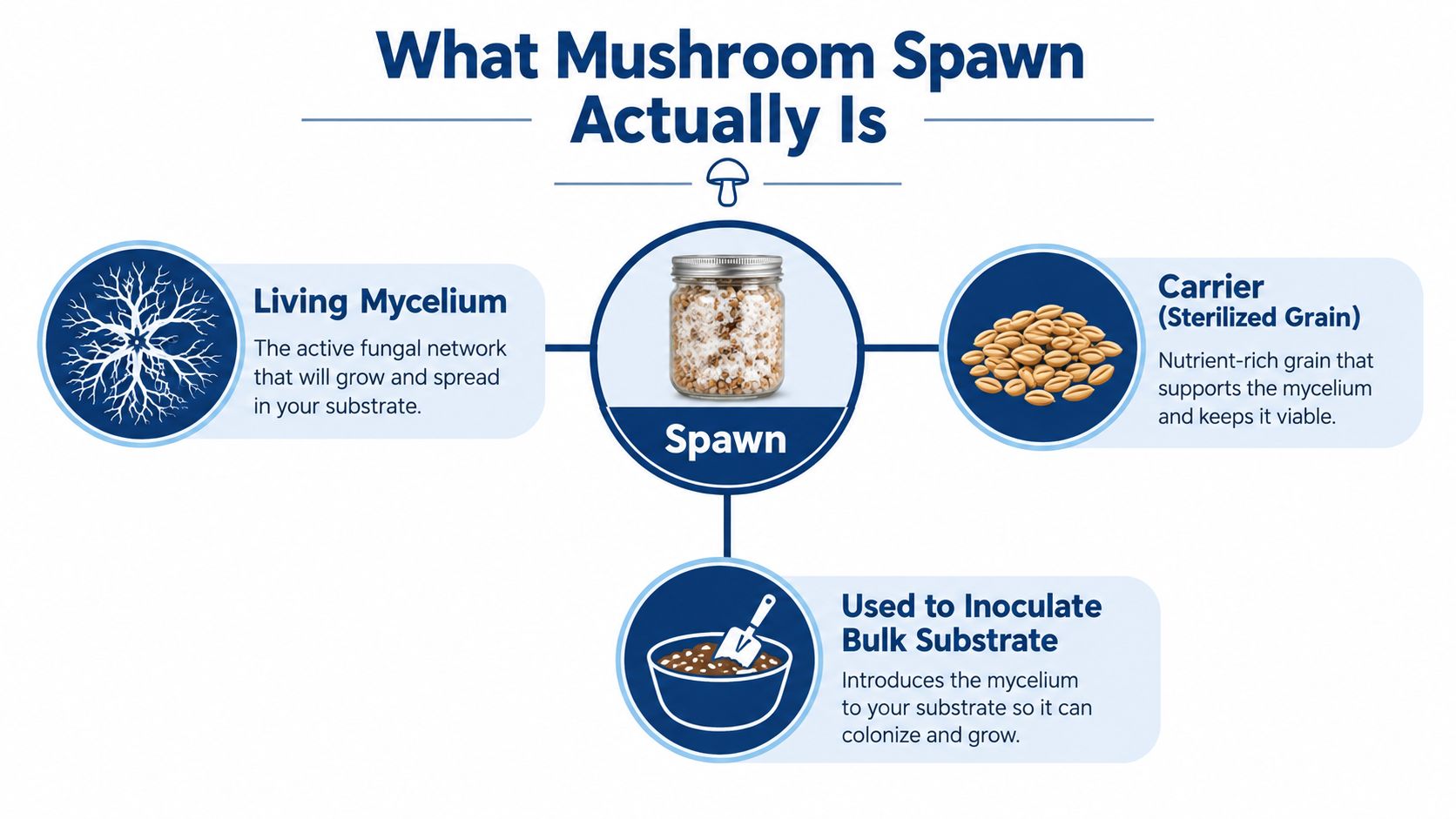
Mushroom spawn is living mycelium growing on a carrier, usually sterilized grain. You use it to inoculate a larger growing medium, or substrate, so the mycelium can colonize that material. Spawn isn't a finished mushroom grow kit, a spore print, or a liquid culture. It's the established biological starting material you'll transfer into a suitable substrate.
That distinction matters when you shop. A grain-spawn bag is meant to be mixed into a bulk substrate, while a grow kit is usually an already-inoculated unit designed for fruiting. Liquid culture is mycelium suspended in liquid, and spores are reproductive cells rather than an established mass of mycelium. Product photos can make these formats look interchangeable, but they serve different steps.
Why modern spawn emphasizes consistency
Spawn became a standardized biological input through improvements in culture purity and contamination control. Commercial cultivation of the white button mushroom began in France around the seventeenth century, when growers transferred naturally occurring mycelium to manure-based beds. Field-collected material could carry pathogens or fail to establish, so the process was unreliable.
The Pasteur Institute developed sterilized, pure-culture spawn for mushroom cultivation in 1893, and U.S. Department of Agriculture scientists developed domestic spawn in 1903, reducing reliance on imports. Penn State researcher James W. Sinden developed grain spawn between 1930 and 1932. The method was widely adopted in the United States by World War II, then spread to Europe after 1950, as described in this history of cultivated mushrooms.
That history explains why current product descriptions often highlight sterile processing, named strains, or reproducible inoculation performance. Those details are more useful than broad claims about a bag being “premium.” Spawn quality depends on clean production and proper handling, not persuasive marketing.
The formats you're likely to encounter online include grain spawn, sawdust spawn, plug spawn, and all-in-one grow bags. Each fits a different growing plan, so identify the format before you decide that a listing matches your needs.
Matching Spawn to Your Substrate and Setup
Choose the substrate and growing setup first, then buy the spawn that fits them. Grain spawn is commonly used to inoculate prepared bulk substrates, including straw or wood-based materials. Sawdust spawn is suited to wood-based substrates and can be used with logs or prepared bags; plug spawn is made for inoculating outdoor logs. An all-in-one grow bag combines substrate and spawn in a single unit, which reduces the number of transfers a beginner has to manage.
This matching step can prevent a frustrating mistake: ordering a format that's perfectly healthy but incompatible with the substrate you can prepare. Grain spawn isn't a shortcut around substrate preparation, and plug spawn isn't the convenient choice if you don't have logs. For more detail on choosing a growing medium for oysters, use this guide to oyster mushroom substrates.
Make a quick setup inventory
Before ordering, write down whether you're growing indoors or outdoors, which species you want, and what you can reliably prepare. An indoor grower with a clean transfer area and prepared bulk substrate has different needs from someone inoculating outdoor logs. A kitchen counter can be kept tidy, but it doesn't substitute for sterilization when the method requires sterile substrate.
Species matters, too. Oyster, shiitake, and lion's mane don't all use the same growing materials or conditions. Check that the seller names a compatible substrate for the strain and format, rather than assuming every mushroom will grow on the same recipe.
Spawn Format | Best Substrate | Skill Level |
|---|---|---|
Grain spawn | Prepared bulk substrate, including suitable straw or wood-based mixes | Beginner to intermediate |
Sawdust spawn | Logs or prepared wood-based substrate | Beginner to intermediate |
Plug spawn | Outdoor hardwood logs | Beginner |
All-in-one grow bag | The substrate included in the bag | Beginner |
The scale of cultivation helps explain why standardized spawn matters, but it doesn't tell you which bag to buy. Global mushroom output reached approximately 44 million tonnes in 2023, more than fivefold higher than in 2000, according to the Penn State Extension overview of Agaricus production. For a home grower, the useful point is that spawn connects a selected culture to a prepared substrate. Your decision should still be based on the materials and equipment you can use.
Matching rule: Buy the format that fits the substrate you can prepare, not the product photo that looks easiest.
Placing a Confident Online Spawn Order
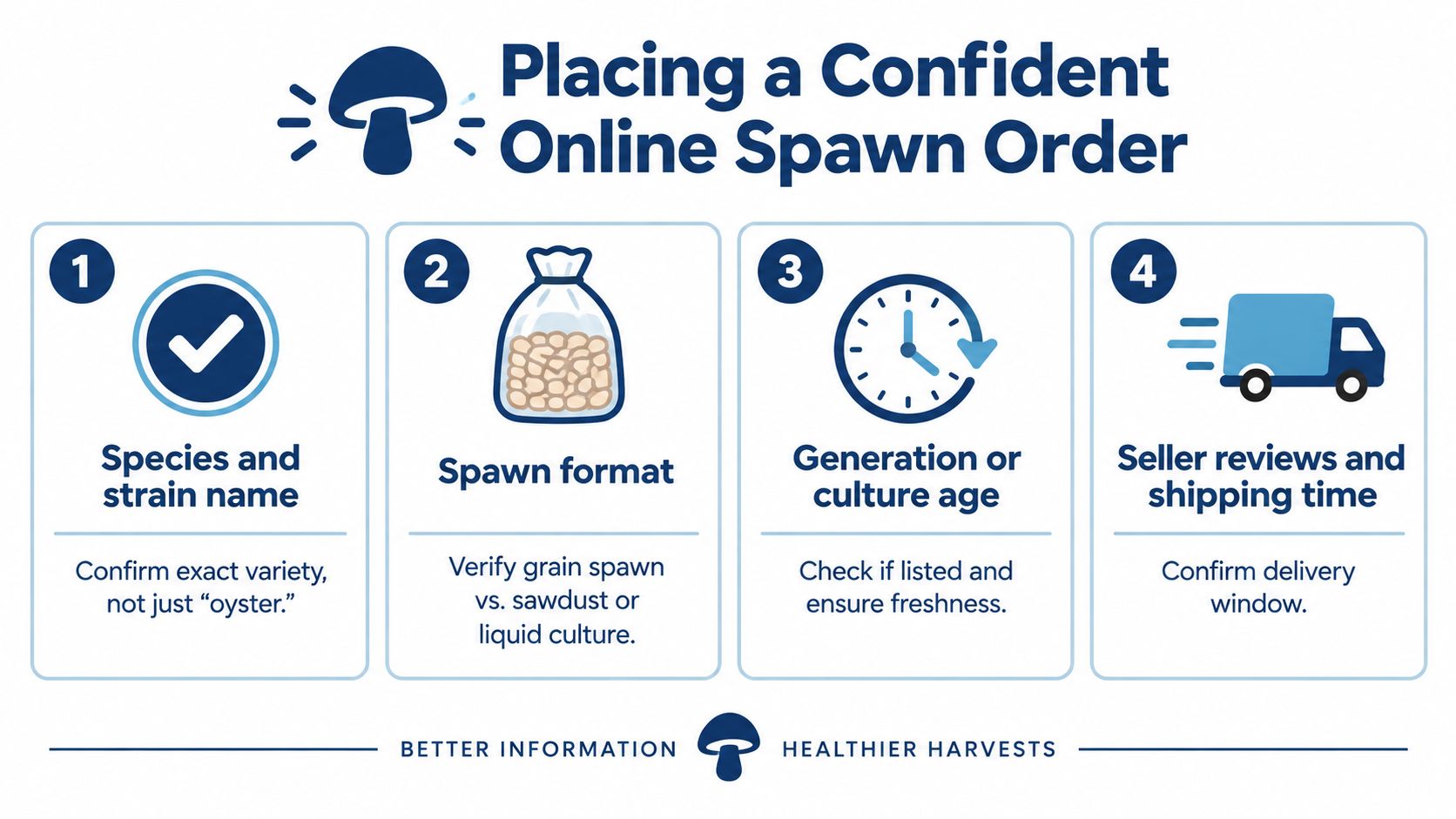
Treat checkout like a small project plan. Before paying, confirm the species and strain, the spawn format, and how that format will be used with your substrate. A listing that only says “oyster” leaves important questions unanswered: the variety and growing requirements may differ, and you need enough information to make a compatible choice.
Read the listing as a handling plan
Look for a named strain, a clear format, and useful information about the product's preparation and storage. If the seller lists a lot or batch identifier, keep it with your records. Ask whether the culture generation or age is available if that information matters to your decision; not every seller will publish it, but a clear answer is more useful than a vague promise of “fresh” spawn.
Check timing before you place the order. Compare the stated ship date with when you'll be home to receive the package and ready to inoculate. If the box arrives while you're away or your substrate isn't prepared, you may have to store the spawn longer than planned. Also find the seller's policy for a damaged bag or material that appears contaminated, and save the support contact details.
Be cautious with product pages that rely on sweeping yield promises, omit the strain, or provide no practical storage instructions. A supplier can't promise that your substrate, transfer technique, or growing conditions will be perfect. You want information that helps you judge the product and handle it properly.
For Denver-area buyers, online ordering and storefront pickup are both options to check with the supplier. Colorado Cultures sells sterilized grain bags and related mushroom-growing supplies through its online store and has storefronts in Lakewood and Englewood. Qualifying online purchases may include a complimentary house culture on request, so confirm the offer and terms before checking out. Its products are positioned for research purposes and serve adults 21+.
Before you pay, confirm the species, substrate match, expected ship date, support channel, and storage plan for arrival. That short check can prevent the most common order-day mismatch: having healthy spawn on hand but nothing ready to inoculate it into.
Unboxing and Inspecting Your Spawn on Arrival
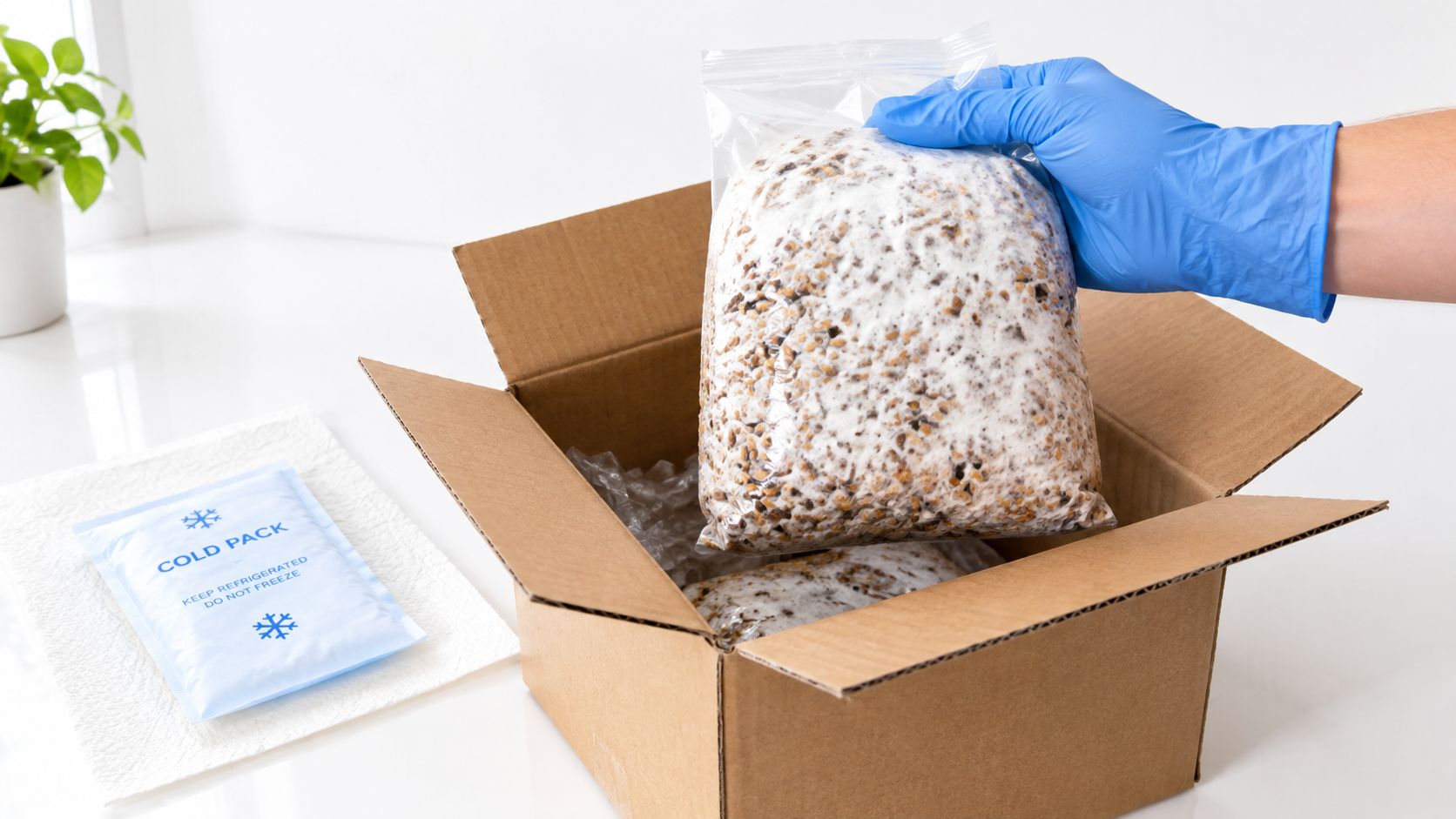
Set the package on a clean surface and inspect it before opening any spawn bag. The outside of the box can tell you whether it was crushed or soaked, and insulation or cold packs, if included, may help you understand how the seller prepared the shipment. Take a few photos as you unpack, especially if the box or packaging appears damaged.
Check the bag before judging the culture
Look at the filter patch and the seal first. The patch should be attached and the bag should remain sealed, with no obvious tear or puncture. Then check the grain through the plastic. A well-colonized bag should show consistent mycelial growth, but colonization can look uneven at different stages, so judge it alongside the product's stated readiness rather than treating appearance alone as proof of failure.
Notice any wet pooling, discolored areas, or unusual growth. Sour, rotten, or chemical odors are warning signs, not something to investigate by opening the bag. Keep any suspect bag separate from healthy-looking bags.
A published HortScience report described roughly 5% contamination in inoculated grain-medium bags and about 2% in inoculated substrate jars under its described sterilized workflow and simple clean procedures. Those figures are a reported result, not a promise for every supplier or grower, and they don't tell you whether a particular shipment is sound. They do underline why it's sensible to inspect each bag and keep track of what you received. Read the HortScience report on grain-medium spawn for its specific method and results.
Use this simple decision rule: isolate, don't open any bag with green, black, or pink coloration, bacterial-looking wet zones, abnormal exudate, or a foul odor. Opening a suspect bag can spread contaminants and put nearby cultures at risk.
The inspection sequence is easier to remember with a visual walk-through, so review the video before handling a questionable package.
If something looks wrong, keep the bag sealed, photograph the issue and its label, and contact the supplier through its stated support channel. Include the order details and a clear description of what you observed. Don't try to salvage or “check” a suspect bag by opening it.
How Much Spawn You Really Need
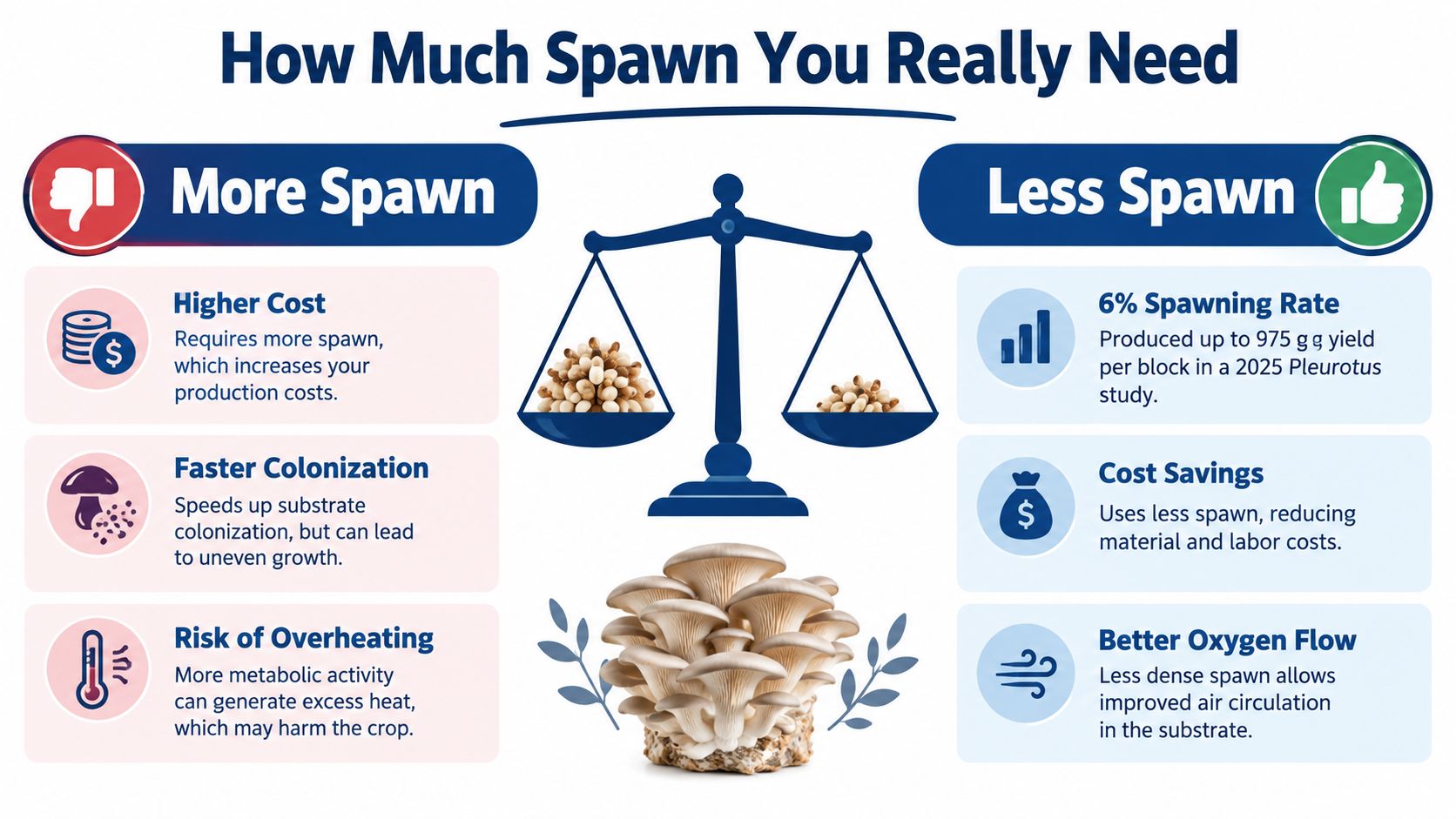
It's tempting to assume that using extra spawn will guarantee faster or better results. That can waste product, and in some setups it may create new problems. A 2025 study of Pleurotus species found that a 6% spawning rate produced the best balance of yield and biological efficiency, reaching up to 975 g of mushrooms per kg of dry substrate, or 97.5% biological efficiency. The study reported that 8% and 10% rates didn't improve results, and higher rates could contribute to substrate overheating. See the 2025 Pleurotus spawning-rate study for the study's conditions and findings.
That result is a useful reference, not a universal recipe. Species, substrate, moisture, and preparation method all affect what works. Also, the study's spawning-rate calculation needs to be followed carefully: the rate is defined relative to substrate weight, and the cited yield is reported per kilogram of dry substrate. Don't mix those bases when planning a batch.
Translate the percentage into a batch plan
If you're working from a 1 kg substrate batch, 6% corresponds to 60 g of spawn. For a 3 kg batch, it corresponds to 180 g. These are arithmetic examples based on the study's percentage, not a claim that the same rate will be optimal for every substrate or species. Check how the study or a supplier defines substrate weight before applying the calculation to your own recipe.
The practical purchasing question is whether the bag size matches your planned batches. A small order can be easier to use while you're learning, while a larger bag makes sense only if you have enough prepared substrate and a storage plan. A mushroom substrate calculator can help you keep your substrate and spawn quantities organized.
A higher spawn rate can be a deliberate choice when faster colonization is important or when a particular difficult setup warrants testing a different rate. But don't use extra spawn as a reflex to compensate for poor substrate preparation, a leaking bag, or questionable handling. For fast colonizers such as oyster mushrooms, adding more may add cost without improving the result.
Spawn quantity is a process variable, not a virtue. Buy enough for the substrate you can prepare and inoculate, then adjust based on what you observe in your own batches.
Storing Spawn Before You Use It
Refrigerate uncontaminated spawn promptly if you can't inoculate it right away, but follow the seller's label for the species and product. Published cultivation guidance puts storage for common temperate genera such as Pleurotus, Lentinula, and Agaricus at approximately 4–6 °C, while active spawn incubation is generally near 25 °C. Species-specific exceptions matter, so don't treat those temperatures as a substitute for product instructions.
Don't freeze spawn unless the supplier explicitly says the product has been validated for freezing. Freezing can damage living mycelium, and a refrigerator is not automatically safe if the bag gets pushed into a freezing zone. Store bags so they stay sealed and protected from repeated temperature swings.
Plan to use it, not just store it
A study of Agaricus bisporus spawn found significant metabolic changes after storage beyond 60 days at 8 °C, with possible effects on viability. That supports a conservative target of using refrigerated spawn within roughly 30–60 days, rather than assuming any printed shelf life applies to every product. The spawn storage study describes the research context; check the supplier's guidance for your specific spawn.
Temperature abuse during shipping, condensation from repeated warming and cooling, and opening bags too early can all complicate storage. When you're ready to inoculate, let the bag warm while still unopened. That helps avoid condensation forming inside when cold spawn meets warmer room air. Use the oldest viable lot first, and don't open a bag days ahead just to inspect it again.
Keep a simple record for every order: arrival date, species, lot, storage temperature, and planned inoculation date. If you buy multiple bags, label them clearly and keep one unopened bag as a reference when practical. Those notes help you distinguish a storage or spawn issue from trouble in the substrate or transfer process. For more on planning storage time, consult this guide to how long sterilized grain bags last.
Putting It All Together for a First Online Order
A first order doesn't have to be a leap of faith. Choose a species and substrate you can prepare, select the matching spawn format, and buy from a supplier that gives you useful strain and batch information. When it arrives, inspect the packaging and bag, store it cold as directed, and inoculate within a realistic window. Keep notes, because your own batch records will tell you more than a generic success promise.
For Denver-area growers, Colorado Cultures provides printable instructions, videos, and email, phone, or in-person help; the company reports a 95% first-time success rate. Weekly Tuesday Deals, the CC Classroom calendar, and wholesale accounts for resellers offer additional ways to engage with its supplies and education. Products are positioned for research purposes and serve adults 21+. A careful, documented process makes the next order easier to plan and troubleshoot.
Colorado Cultures offers online ordering for grain spawn, all-in-one grow bags, substrates, and other mushroom-growing supplies, with local storefronts in Lakewood and Englewood. If you're preparing your first inoculation, visit Colorado Cultures to compare formats, find practical growing support, and plan an order around the substrate you're ready to use.
Comments